Short answer: For Vancouver homeowners, a professionally installed epoxy base coat with a polyaspartic topcoat is the best garage floor coating available. It lasts 10 to 15 years and handles road salt, wet tires, and the Lower Mainland's high water table better than any other system. Every option below that involves meaningful trade-offs. Here's the full ranked breakdown.
Not all garage floor coatings are equal, and in Metro Vancouver the gap between the best and worst options is wider than in most of Canada. The combination of high water table, 1,150mm of annual rainfall, road salt tracked in from winter driving, and temperature cycling between the Coast and the Fraser Valley creates conditions that expose weak coating systems faster than a dry inland climate would. What lasts two years in Calgary might not survive one winter in Coquitlam.
This guide covers every realistic garage floor coating option available to Vancouver homeowners in 2026, ranked from worst to best based on how they actually perform in this specific market. The ranking criteria are durability under BC conditions, realistic lifespan, total cost over time, and honestly how often we see each option come through our door as a failed floor that needs to be stripped and redone.
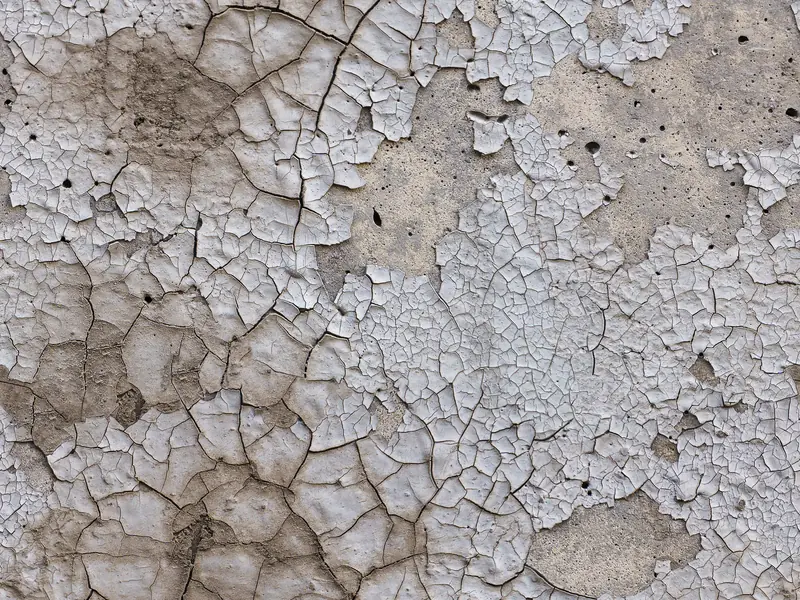
Latex and acrylic paints are the most heavily marketed garage floor products at home improvement stores, and the worst performing. They air-dry on top of the slab rather than bonding into it, so hot tires lift them, road salt stains them, and slab moisture pushes them off from underneath. In a Vancouver garage that parks a car, that usually happens within the first winter.
Paint makes sense for a storage-only garage with no vehicle in it, or as a quick tidy-up before a sale. For a working garage it is money spent twice, because every layer has to be ground off before the floor can be coated properly. The full comparison, including how to tell paint from a real coating on the shelf, is on our epoxy floor paint vs epoxy coating page.
One-part products sold as "epoxy paint" or "garage floor epoxy" at hardware stores are latex paint with a small amount of epoxy resin added. They dry rather than cure, and they never form the chemical bond with concrete that a two-part system does. They outlast plain latex, typically 2 to 4 years, but fail the same way: hot tire pickup, staining, and peeling wherever the slab carries moisture.
The quick test in the aisle is the number of containers. One can that you open and roll is paint. Part A and Part B mixed before use is a coating. We go through the label details, and when paint is still the right choice, on the epoxy floor paint vs epoxy coating page.
The $150 to $500 DIY kits sold at big-box hardware stores are actual two-part epoxy, with resin and hardener mixed before application. The chemistry is legitimate. The problem is the formulation and the prep.
Professional epoxy systems use 100% solids products, meaning everything you apply cures to a solid film. Consumer kits are water-based or high-solvent, typically 30 to 50% solids, so up to half of what you apply evaporates and leaves a much thinner cured film. That thinner film is far more susceptible to moisture vapour transmission pushing up through the slab from below, which is a significant problem in Metro Vancouver's high-water-table environment. It's also more susceptible to hot tire pickup and surface abrasion.
The kits also don't include diamond grinding, the most important step in any coating installation. Without grinding, the epoxy bonds to the surface layer of the concrete rather than the concrete's pore structure, and that bond is far weaker. In Vancouver, where many slabs carry high moisture vapour emission rates due to the region's geology, skipping the moisture test (which follows ASTM F1869 or F2170 protocols) and the moisture-mitigating primer that a professional would apply is the fastest path to a blistered floor within two years.
Penetrating concrete sealers (silicates, silanes, siloxanes) work differently from surface coatings. They soak into the concrete pores and chemically react to densify the slab and reduce its moisture permeability from within. Because they remain breathable, they don't trap moisture and don't peel. They also don't change the appearance of the floor significantly; the concrete still looks like concrete.
A penetrating sealer is a reasonable choice if you want to protect the concrete from staining and salt ingress without committing to a full coating system. It is also a sensible step before applying an epoxy coating, as a well-sealed slab provides a better substrate. On its own, though, it provides no real abrasion resistance, no visual upgrade, and no protection against oil staining that actually penetrates the reacted surface layer.
Topical sealers (acrylic or polyurethane products that sit on the surface) are closer to paint in behaviour and share paint's failure modes under vehicle traffic. The penetrating type is the only sealer worth considering for a working garage floor.
Interlocking PVC or polypropylene tiles and roll-out rubber mats are not concrete coatings. They sit on top of the slab rather than bonding to it. They have genuine advantages in specific situations: no curing time, no slab preparation required, fully reversible (important for renters), and you can replace individual tiles if they're damaged.
For most Vancouver homeowners wanting a permanent floor, though, they have meaningful drawbacks. Moisture can infiltrate under the tiles through the gaps. This is a particular concern on Lower Mainland slabs with high moisture vapour emission, where the result is mould growth under the tiles that is difficult to detect until it becomes a problem. Heavy vehicle movement on wet tiles can shift them over time. And the floor-level gaps collect dirt, debris, and road salt that is harder to clean than a joint-free coated surface.
Tiles make sense for: rentals where you can't alter the slab; workshop zones where you want anti-fatigue properties; temporary setups; or situations where you need the floor in use the same day. For a permanent attached garage that sees daily vehicle traffic in Vancouver's wet climate, a coated floor is the better long-term answer.
Polished concrete is a mechanical process (diamond grinding and polishing the existing slab to progressively finer grits, then densifying and sealing it) rather than a coating applied on top. The result is a hard, low-maintenance surface that is part of the slab itself rather than a layer bonded to it. It doesn't peel, it doesn't chip, and it doesn't require periodic recoating the way epoxy does.
The limitation for garages is practical: polished concrete doesn't tolerate significant slab defects well, it can be slippery when wet without an anti-slip sealer applied, and it doesn't provide the same oil and chemical resistance as an epoxy system without a chemical-resistant topcoat. For garages with significant cracking, spalling, or oil staining, it may not be the right starting point. For a clean, sound slab where a minimalist aesthetic suits the space, it is a durable and low-maintenance choice that can last 20 to 30 years.
It typically runs $6 to $12 per square foot in Vancouver depending on the finish level, with cost increasing at higher polish grits and full aggregate exposure. For most residential garages, the decorative appeal and long-term durability of a professional epoxy system represent better value.
A professionally installed 100% solids epoxy system (diamond ground, moisture tested, correctly primed, and applied at full specified thickness) is a fundamentally different product from the consumer kits ranked below it. The 100% solids chemistry means everything applied cures to a solid film, producing a dense, hard surface that bonds aggressively to the prepared concrete pore structure.
Where a professional epoxy system loses a point compared to the combination system below it is UV sensitivity. Standard epoxy uses aromatic chemistry that yellows under ultraviolet light. A garage with a south-facing door left open frequently, or any garage with significant natural light, will show colour shift over a few years. For an interior garage with no direct sun exposure, this is rarely noticeable. For sun-exposed applications, the polyaspartic topcoat in the combination system solves the problem entirely.
On a properly prepared and moisture-tested slab, a professional epoxy system handles daily vehicle traffic, road salt, oil drips, and wet tires for 10 to 15 years in Metro Vancouver conditions. The preparation is what determines whether it holds: moisture testing is non-negotiable on Lower Mainland slabs, where a significant percentage of concrete carries high vapour emission rates that will delaminate an untreated system.
The combination of a 100% solids epoxy base coat and a polyaspartic topcoat uses each material where it performs best. The epoxy goes down first because it bonds more deeply into the diamond-ground concrete profile and builds a strong structural foundation at higher film thickness. The polyaspartic goes on top because it is engineered to be UV-stable (highly resistant to yellowing or ambering even under sun exposure), and it provides superior abrasion resistance, chemical resistance, and faster return to service at the surface where daily use actually happens.
This is the combination we install on most Vancouver residential garage floors, not as an upsell but because it addresses the two main failure modes in this market: moisture (managed through testing and MVB primer where required) and UV yellowing (solved by the polyaspartic topcoat). The decorative flake broadcast into the epoxy base provides both anti-slip texture and the visual upgrade most homeowners are looking for: a floor that reads as intentional rather than industrial.
For a full breakdown of how these two systems compare individually, see our guide: Epoxy vs Polyaspartic: Which Floor Coating is Right for Your Vancouver Garage?
The One Thing That Matters More Than Your Choice of System
Every ranking above assumes professional-grade installation with proper surface preparation. The single biggest predictor of whether any coating lasts in a Vancouver garage is not the brand of product used. It is whether the concrete was diamond-ground to the correct surface profile, moisture-tested, and correctly primed before anything was applied.
A premium polyaspartic system installed over an unground, untested slab in Richmond will fail faster than a basic epoxy system installed correctly over a properly prepared slab in Burnaby. The coating is only as good as the surface it bonds to.
This is particularly important in Metro Vancouver because of the region's geology. Lower Mainland slabs, especially in Richmond, Delta, and Surrey, and in any home built before the 1990s without a sub-slab vapour barrier, commonly carry moisture vapour emission rates that exceed what standard epoxy primers can tolerate. A professional installer tests for this before specifying the system. A contractor who doesn't discuss moisture testing before a Vancouver garage floor installation is a significant red flag regardless of what product they're using.
For a full explanation of why this matters specifically in BC, see our guide: Why Epoxy Floors Fail in Vancouver: Moisture Vapour, Hydrostatic Pressure & What to Do About It.
For current 2026 pricing across all system types, see our Vancouver epoxy flooring cost guide. For the dedicated garage floor page with finish options and process detail, visit epoxy garage floor coating Vancouver.
If you are still deciding whether epoxy suits your garage at all, start with What Is Epoxy Flooring? Pros, Cons and How Long It Lasts, which also compares DIY kits with a professional install.