Polished Concrete Flooring in Vancouver
Polished concrete turns the slab you already have into a joint-free, low-maintenance, easy to clean floor built to last 20 to 30+ years. Our concrete polishing team grinds, densifies, and seals your existing concrete to a matte, satin, or high-gloss finish for Vancouver homes, retail spaces, showrooms, and industrial floors. No coatings to peel, no tearing out and replacing. Pricing is set by your slab condition and the finish you choose, and we confirm it with a free on-site assessment across the Lower Mainland.
What Is Polished Concrete Flooring?
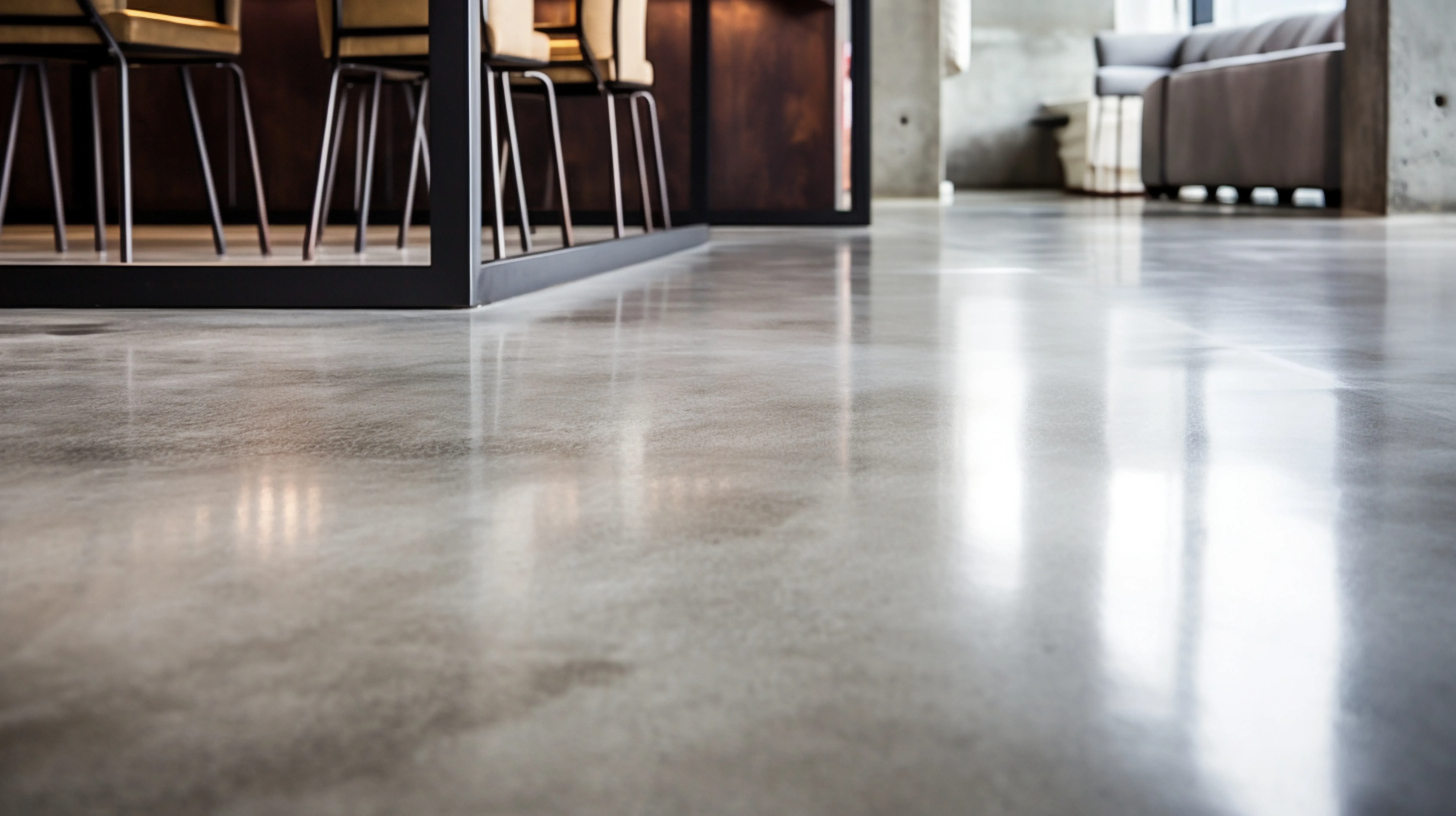
Polished concrete flooring is a multi-step mechanical process that turns an existing concrete surface into a smooth, durable, and refined finished floor. Using progressively finer industrial diamond abrasives and a chemical densifier, our team refines the surface to your chosen sheen: matte, satin, semi-gloss, or full high-gloss. The densifier penetrates and permanently hardens the concrete itself, and a protective guard or sealer is applied on top to maintain stain resistance and sheen.
Unlike epoxy coatings, the base polish process is permanent. The concrete doesn't peel, bubble, or delaminate. The topical sealer does need reapplication roughly every 2 to 4 years, which is why maintenance is noted below.
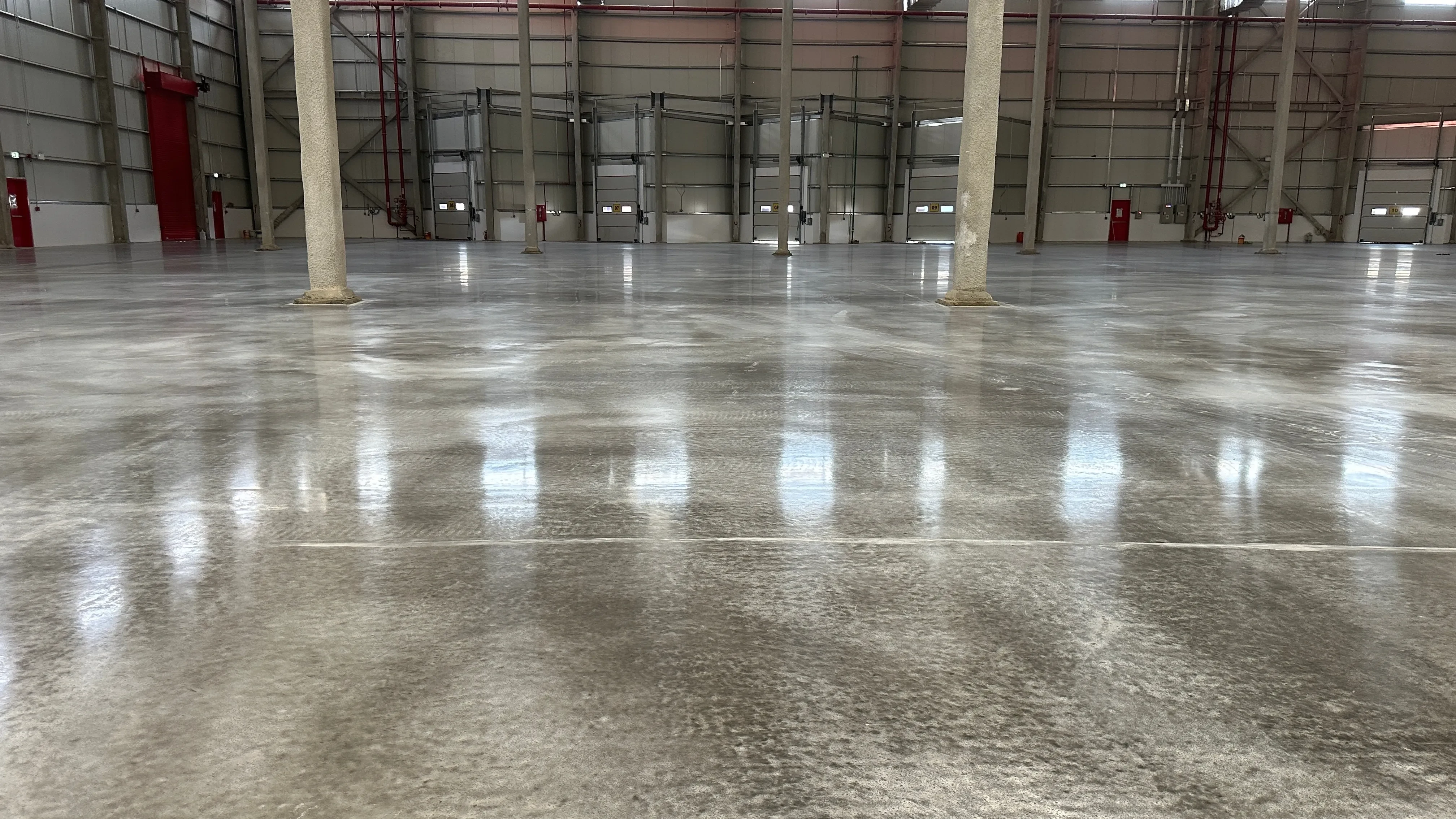
This is one of the reasons polished concrete has become a leading choice across Greater Vancouver for modern homes, retail stores, showrooms, restaurants, warehouses, and industrial spaces. It pairs an industrial-modern look with genuinely low upkeep, and it holds up to heavy foot traffic and rolling loads better than almost any other flooring system. For Vancouver property owners weighing their options, it sits at the durable, long-life end of the spectrum. Our garage floor coating options guide ranks polished concrete alongside epoxy, polyaspartic, and DIY alternatives, and is useful reading before committing to any system. For warehouses with forklift lanes or chemical areas, compare it with industrial epoxy flooring.
Polished concrete is often confused with concrete that has simply been sealed or painted. The difference is the grinding and densifying. That is what creates the hardness, the light reflectivity, and the multi-decade lifespan that a surface coating alone cannot match. Finish quality can even be measured objectively: the gloss level of a polished floor is graded against recognized industry standards such as ASTM D523 specular gloss testing, which classifies finishes from matte through high-gloss.
How Much Does Polished Concrete Cost in Vancouver?
In Vancouver, polished concrete typically runs $6 to $12 per sq ft installed, priced by finish level and slab condition rather than a single flat rate. The single biggest factor is the state of your existing slab. Because the concrete itself becomes the finished floor, the amount of grinding, crack repair, and surface preparation required drives most of the cost.
The sheen level you choose is the next biggest factor: a basic grind-and-seal takes far fewer passes than a deep, mirror-like high-gloss polish. The most common surprise for property owners is that the prep work (repairs, moisture treatment, and surface correction) often affects the quote more than the decorative finish itself.
| Finish Level | What It Involves | Best For |
|---|---|---|
| Basic Grind & Seal | Grind, densify, and seal: a clean, low-sheen finish at the lowest-cost tier | Basements, garages, warehouses |
| Matte / Satin Polish | Additional polishing passes for a smooth, soft-sheen surface (the mid tier) | Retail stores, offices, modern homes |
| High-Gloss Premium Polish | Many fine polishing passes for a reflective, mirror-like finish (the top tier) | Showrooms, luxury homes, feature floors |
Exact pricing is confirmed at your free on-site assessment, since every slab and finish is different.
What Affects Your Final Price
- Slab condition: cracks, stains, pitting, and uneven areas add prep and repair time
- Floor size and layout: larger, open floors are more efficient per square foot
- Desired sheen level: more polishing passes mean a higher-gloss, higher-cost finish
- Decorative dyes, scoring, or exposed-aggregate finishes
- Moisture mitigation, if slab testing shows it is needed in Vancouver's damp climate
- Floor size: floors under roughly 350 sq ft are quoted as a flat project price rather than by the square foot, because setup and mobilization don't shrink with the job
Because every slab is different, the most accurate number always comes from an in-person look. We provide free, no-obligation on-site assessments across Vancouver and the Lower Mainland, and you receive a detailed written quote with no pressure. If you are still deciding between systems, compare it against our full epoxy flooring cost guide.
Concrete Polishing in Vancouver, Step by Step
A polished concrete floor that lasts decades comes down to the quality of each stage. In Vancouver's damp coastal climate, the preparation and densifying steps matter even more, because a poorly prepped or untested slab is where problems start. Here is how our team approaches every project.
Most polished concrete installations in Greater Vancouver take 2 to 4 days, depending on floor size, slab condition, and the number of polishing passes your finish requires. We confirm the timeline at your assessment so you can plan around it.
Is Polished Concrete Right for Your Space?
Polished concrete is an excellent choice for many Vancouver properties, but it is not the perfect fit for every room. Being upfront about both sides helps you make the right call and decide whether a polished slab or one of our epoxy coating systems suits your space better.
Advantages
- Extremely durable: a 20 to 30+ year lifespan with proper care
- Very low maintenance: no waxing or stripping, just sweeping and the occasional mop
- No coating to peel, chip, or delaminate over time
- Resistant to moisture and stains once densified and sealed
- Sleek, modern look from matte to mirror finish, with optional dyes
- Hypoallergenic and dust-free, ideal for clean spaces and allergy-sensitive homes
- Improves light reflectivity, which can reduce lighting costs in large spaces
Considerations
- It is a hard surface, so area rugs add comfort in living spaces
- Concrete can feel cool in winter; it pairs well with radiant in-floor heating
- Best suited to ground-level slabs unless upper floors are reinforced
- A high-gloss finish can be slippery when wet, but we can adjust traction for entryways
Polished Concrete Garage, Basement and Residential Floors
Polished concrete is not only for warehouses and showrooms. It works in homes too, as long as the slab is sound and you understand the trade-offs for each room.
Polished concrete garage floors. A polished or grind-and-seal garage floor has no coating on top, so there is nothing to peel, and it handles hot tires well. The trade-off is stain resistance. Oil, brake fluid and coolant can mark a polished slab if they sit, where a coated floor wipes clean, and a smooth polish is slippery with wet tires unless the guard sealer includes grip. For a garage that parks a daily driver, a flake coating is usually the more forgiving floor. For a showpiece garage or a clean workshop, polish is a strong choice.
Polished concrete basement floors. Basements are a natural fit, because polished concrete breathes: moisture that rises through the slab can escape rather than push a coating off from below. The slab still needs a moisture test and any cracks repaired, and older basements with patched or painted floors may not polish evenly. Area rugs add comfort in living space.
Residential polished concrete. On slab-on-grade homes, laneway houses and modern builds, a polished slab can be the finished floor throughout the main level. It pairs well with in-floor radiant heating and needs its topical guard sealer reapplied every few years. If you are weighing polish against a coating for rooms inside the house, see residential epoxy flooring.
Pricing follows the same $6 to $12 per square foot range as any polished floor, set mostly by the sheen level and the condition of the slab. A garage or basement usually lands toward the grind-and-seal or satin end of that range.
Grind and Seal vs Full Concrete Floor Polishing
There are two ways to get a finished concrete floor, and they are priced very differently. A grind and seal job grinds the slab to a clean, even surface and seals it with a clear topical sealer. If you only need dust and stain protection without grinding for looks, concrete sealing is the lower-cost option. A full polish keeps grinding through progressively finer diamonds, densifies the concrete and burnishes it to a real sheen before the sealer goes on.
- Grind and seal: a clean, satin concrete look for garages, basements, shops and back-of-house areas.
- Full concrete floor polishing: a reflective finish for living spaces, retail floors, showrooms and offices.
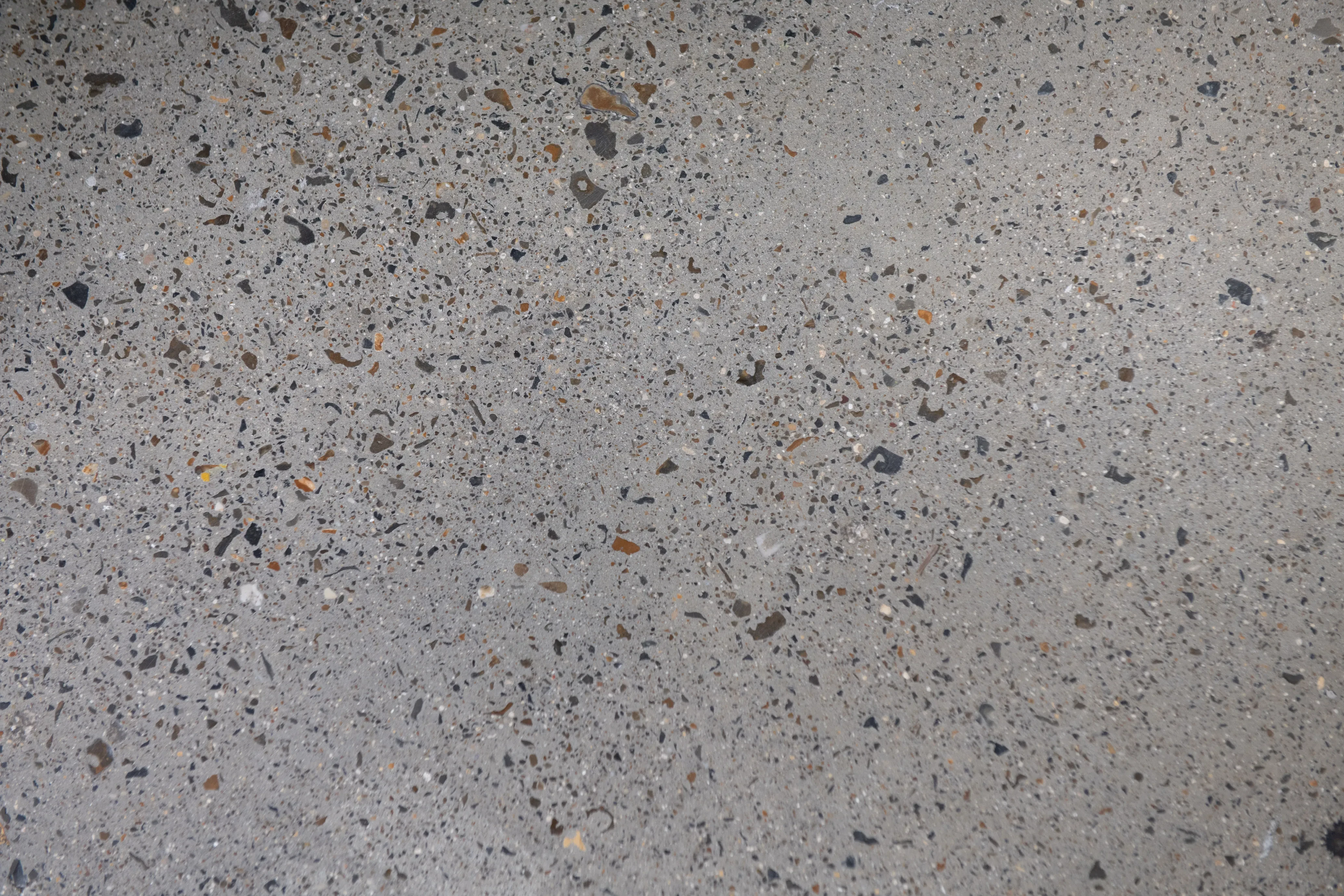
- Aggregate exposure: choose cream (little stone showing), salt and pepper, or full aggregate, decided before grinding starts.
Polished concrete works in a garage or basement as long as the slab is sound, and we fill cracks before polishing so they read as a clean line rather than a chipped edge. Either finish needs its topical sealer refreshed roughly every 2 to 4 years. If you want colour or flake instead of bare concrete, compare with our garage epoxy floors and basement epoxy flooring, and see the cost guide for current ranges.
Polished Concrete and Vancouver's Climate
Vancouver and the wider Lower Mainland sit in a wet, coastal climate, and that has real consequences for any concrete floor. Moisture moving up through a slab is the most common cause of flooring problems in the region, and it can undermine coatings and finishes if it is not identified first. This is exactly why our process starts with assessing the slab and, where needed, moisture mitigation before we polish. Polished concrete stays indoors; exterior slabs get a patio and porch coating instead.
We also follow WorkSafeBC's guidance on controlling silica dust during grinding, using dust-extraction equipment to keep your Vancouver home or workplace clean and safe throughout the job.
Polished concrete actually handles BC's conditions well. Once the slab is densified and sealed, it becomes highly resistant to moisture and the kind of damp that affects basements and ground-floor spaces across Vancouver, Burnaby, and Surrey. There is no surface coating to trap moisture or lift, which is a meaningful advantage in this climate. For homes and businesses from Richmond to Langley, a properly prepared polished floor is one of the most climate-resilient options available.
Caring for a Polished Concrete Floor
One of the biggest long-term advantages of polished concrete is how little it asks of you. There is no waxing, no stripping, and no harsh chemical routine. Day-to-day care keeps the floor looking its best:
- Sweep or dust-mop regularly to remove grit that can dull the surface
- Wet-mop weekly with a pH-neutral cleaner
- Avoid acidic or harsh cleaning products that can etch the surface
- Use mats at entryways in high-traffic and wet areas
- Have the floor resealed roughly every 2 to 4 years to maintain stain resistance and shine
For comparison, learn how upkeep differs on our garage epoxy flooring and metallic epoxy floor pages.
Polished Concrete Warranty
Every polished concrete floor we install is backed by a written warranty, provided with your quote. We use professional-grade, low-VOC systems from top North American manufacturers, and we confirm the warranty terms for your slab at the free on-site assessment, once we have seen its condition and agreed on the finish level.
Polished Concrete Vancouver: FAQ
Get Your Free Polished Concrete Quote
Tell us about your space and we'll arrange a free on-site assessment across Greater Vancouver, with clear, no-obligation pricing matched to your slab and finish.