Microcement Vancouver
Joint-free micro cement for bathrooms, showers, floors, kitchen surfaces and walls across Greater Vancouver BC. Applied 2 to 3mm thin over your existing tile: no demolition, no grout lines, highly water-resistant when sealed. The continuous concrete aesthetic for any surface in your home or commercial space.
The Joint-free Surface Transforming Vancouver Interiors
Microcement (also called micro cement, micro concrete, microconcrete or decorative concrete) is a polymer-modified cementitious coating applied in ultra-thin layers, meeting BC Building Code standards for surface treatments of 2 to 3mm over virtually any existing surface. Unlike tile or polished concrete, microcement goes on floors, walls, ceilings, shower enclosures, kitchen countertops and even furniture. The result is a joint-free, continuous surface with zero grout lines and a raw concrete aesthetic available in any colour.
In Vancouver BC, microcement and micro concrete finishes are among the fastest-growing renovation choices for homeowners and commercial designers who want the look of poured concrete without the weight, the cost, or the limitations of an actual slab. It is applied over your existing surfaces (including existing tile) in most cases without demolition. When sealed correctly with a polyurethane or epoxy sealer system, microcement is highly resistant to moisture penetration when properly sealed. That makes it one of the only truly joint-free options for Vancouver bathroom walls, shower enclosures and wet rooms. Related finishes like tadelakt offer a similar concept; microcement is the more accessible and widely available version for Vancouver applications.
In Vancouver specifically: our high-humidity climate means sealer quality matters more here than in drier regions. We use wet-area-rated polyurethane sealers on all bathroom and shower applications, and recommend a sealer refresh every 5 to 7 years to maintain full waterproofing in Vancouver's damp conditions.
Where We Apply Microcement in Vancouver Homes & Businesses
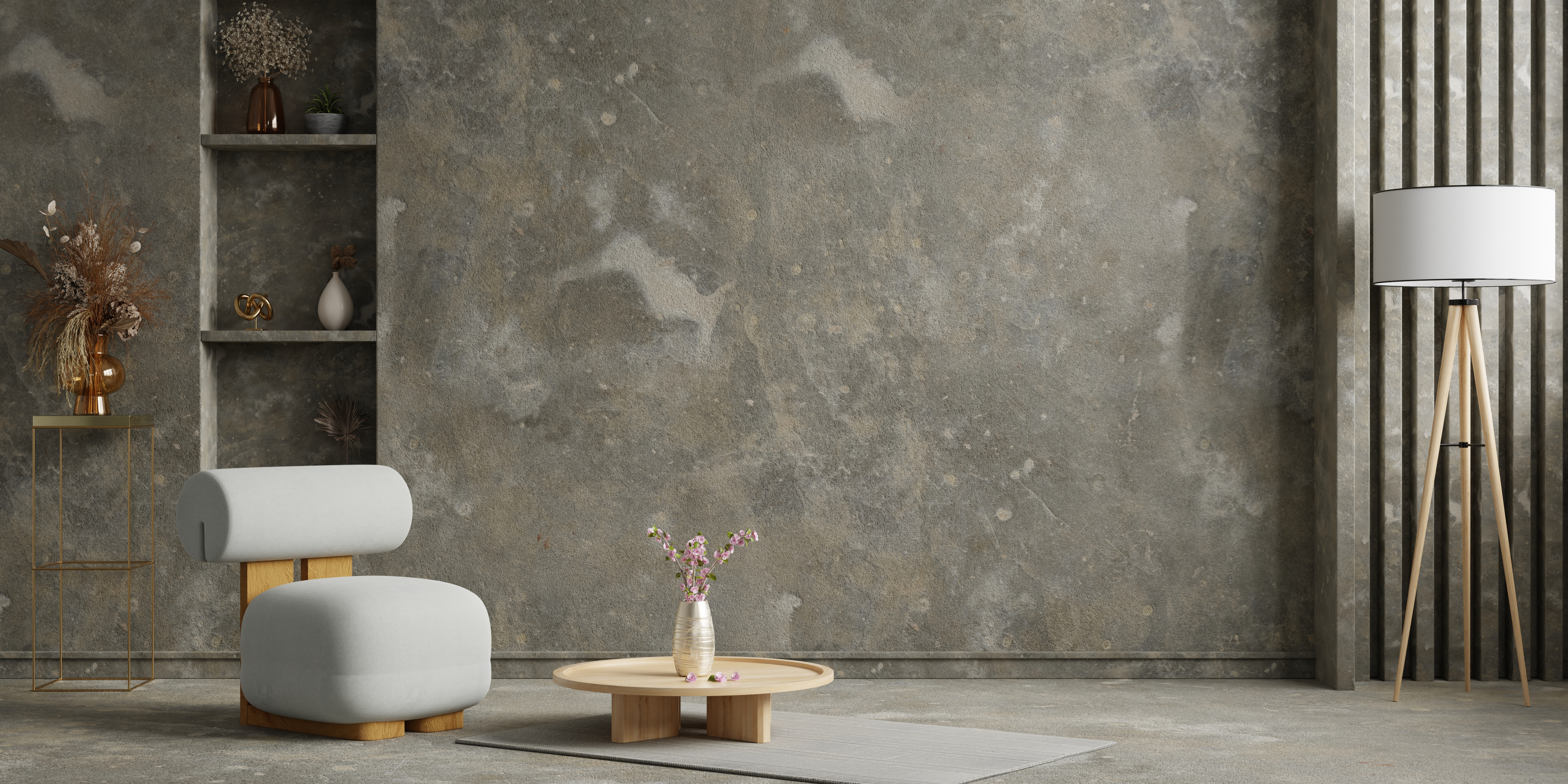
Our most-requested application. Floor-to-ceiling microcement bathrooms in Vancouver with no grout lines, no seams and a spa-like aesthetic. Highly water-resistant when sealed.
Joint-free shower enclosures and wet rooms. Applied with fibreglass mesh reinforcement, coved base detail, and a 3-coat wet-area sealer. One of the most popular alternatives to large-format tile.
Living rooms, bedrooms, hallways and open-plan floors in a continuous joint-free surface. Applied over concrete, tile or plywood subfloors. Available in smooth matte to lightly textured finishes.
Kitchen floors and countertops in joint-free micro cement. Food-safe epoxy sealer on countertops. Slip-resistant broadcast in cooking zones. A joint-free alternative to tile backsplashes too.
Feature walls, fireplace surrounds, TV accent walls and architectural surfaces. The raw concrete look on any wall, without the weight or cost of actual concrete panels.
Applied over existing laminate, tile or wood countertops. Sealed with food-safe epoxy. Annual re-sealing recommended to maintain stain resistance.
Why Vancouver Homeowners Choose Microcement Bathrooms
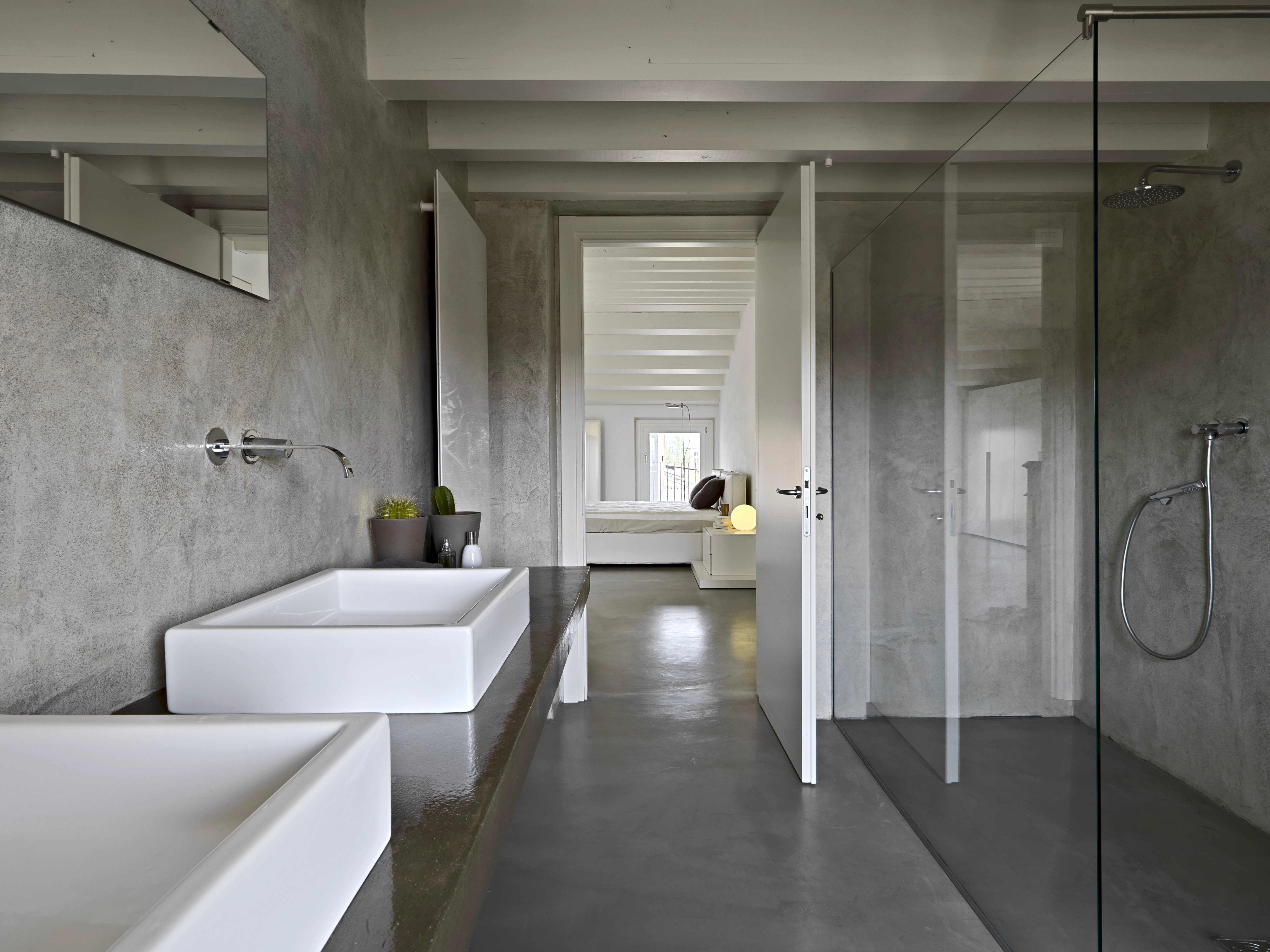
Microcement bathroom renovations are one of the fastest-growing trends in Greater Vancouver, and the reasons are practical, not just aesthetic. In a city where bathroom renovations routinely cost $20,000 to $40,000 for a full tile-out and retile, microcement offers a joint-free result at lower disruption and often lower overall cost.
No Grout Lines, No Mould
Standard tile creates dozens of grout joints per square metre, and every one is a potential trap for mould, bacteria and soap scum in Vancouver's humid bathroom environment. Microcement creates a completely joint-free surface with no joints whatsoever. Cleaning a microcement bathroom means wiping a single continuous surface rather than scrubbing grid after grid of grout.
Applied Over Existing Tile, No Demolition
In most Vancouver bathrooms, microcement goes directly over your existing ceramic or porcelain tile. No skip bin, no weeks of dust and noise, no structural disruption. The grout lines are filled and levelled as part of our prep process and fibreglass mesh reinforcement is embedded to prevent reflective cracking over the old joints. The result: a renovation that looks like a full gut-out without any of the chaos.
Floor-to-Ceiling Continuity
The same microcement flows from your bathroom floor up the walls and into the shower enclosure: one continuous material with no transitions, no trim pieces, no grout lines to break the space. This floor-to-ceiling effect, popular in luxury bathrooms and European design, is impossible to achieve with tile without heavy grout lines interrupting the surface at every course.
Compatible with Underfloor Heating
Microcement is fully compatible with electric and hydronic underfloor heating systems, which are common in Vancouver new builds and high-end renovations. At 2 to 3mm thick, it transfers heat far more efficiently than tile at 8 to 15mm. We use a flexible microcement formulation where underfloor heat is present to accommodate thermal expansion.
Joint-free Microcement Showers & Wet Rooms
Microcement shower enclosures and wet rooms are one of our most popular installations in Vancouver. A joint-free microcement shower eliminates the dozens of grout lines in a tiled shower, the seams where mould grows and sealant fails year after year. Instead, the entire shower enclosure is a single continuous surface that cleans in seconds and looks architecturally clean.
For Vancouver shower and wet room applications, we install to a full wet-room specification: a bonding primer on the substrate, fibreglass mesh reinforcement embedded in the first coat (critical for crack prevention), 2 to 3 coats of microcement, and a 3-coat polyurethane sealer rated for continuous water exposure. A coved base detail at the wall-floor junction eliminates the seam where water can otherwise track behind the finish.
Is microcement suitable for showers? Yes. When installed to this specification, microcement showers handle daily use in Vancouver homes without issue. The sealer is the critical variable: it must be a wet-area-rated polyurethane, applied in 3 coats, and refreshed every 5 to 7 years. A microcement shower sealed with a standard floor sealer will fail prematurely in a Vancouver wet room environment.
How Microcement Compares to Your Alternatives
Vancouver homeowners most commonly compare microcement against large-format tile, polished concrete, and vinyl plank for floors and bathrooms. Here is an honest comparison:
| Feature | Microcement | Tile | Polished Concrete | Vinyl Plank |
|---|---|---|---|---|
| Grout lines | None, joint-free | Yes | None | Click joints |
| Water Resistance | High (when sealed) | Tile yes, grout needs sealing | High (when sealed) | High |
| Goes on walls | Yes | Yes | No, slab only | No |
| Applied over existing tile | Yes, no demo | Requires demo | Slab required | Often yes |
| Thickness added | 2 to 3mm | 8 to 15mm | 0mm (existing slab) | 4 to 8mm |
| Underfloor heat compatible | Yes | Yes | Yes | Limited |
| Maintenance required | Sealer every 5 to 7 yr | Grout cleaning | Sealer every 5 to 7 yr | Minimal |
| Vancouver installed cost | $15 to $30/sq ft | $15 to $35/sq ft | $10 to $20/sq ft | $8 to $15/sq ft |
The key advantage microcement has over every other option is the ability to cover floors, walls, showers and countertops in a single continuous joint-free material. No other surface option in Vancouver can achieve floor-to-ceiling continuity without grout lines or transitions.
Microcement Durability: Addressing the Most Common Concern
The most common question we hear from Vancouver homeowners is: does microcement crack? The answer depends entirely on how it is installed. Properly installed microcement is highly resistant to cracking under normal residential or commercial use. Cracking occurs when:
- Fibreglass mesh reinforcement is skipped (the mesh is what bridges substrate joints and grout lines and prevents reflective cracking)
- The substrate is poorly prepared: loose, contaminated or structurally unsound substrates transmit movement directly to the microcement layer
- An inflexible formulation is used over a substrate with underfloor heating, where thermal expansion requires a flexible microcement mix
- The microcement is applied too thick in a single coat; coats must be thin and built up with full cure time between each
In our installations, we embed fibreglass reinforcement mesh in the first coat on every project, verify the substrate before any material is applied, and use flexible formulations where required. The result is a microcement surface that lasts 10 to 20 years under normal use without cracking when installed correctly.
Microcement Cost Vancouver, 2026
Microcement costs more than tile per square foot because of the skill-intensive hand application process: each coat is trowelled by hand, built up in thin layers, and sanded between coats. Here is a realistic 2026 pricing breakdown for Greater Vancouver:
| Application | Price Range (Installed) | Typical Vancouver Project |
|---|---|---|
| Bathroom floor | $18 to $25 / sq ft | 50 sq ft floor: ~$900 to $1,250 |
| Bathroom walls (3 walls) | $20 to $28 / sq ft | 180 sq ft walls: ~$3,600 to $5,000 |
| Shower enclosure | $22 to $30 / sq ft | 80 sq ft shower: ~$1,750 to $2,400 |
| Living / bedroom floor | $15 to $22 / sq ft | 300 sq ft: ~$4,500 to $6,600 |
| Kitchen countertop | $25 to $35 / sq ft | 30 sq ft counter: ~$750 to $1,050 |
| Feature / accent wall | $18 to $26 / sq ft | 100 sq ft wall: ~$1,800 to $2,600 |
2026 estimates for Greater Vancouver. Final cost depends on surface condition, existing tile grout depth (must be filled), underfloor heat presence, and colour and texture selected. Contact us for a free project quote.
How We Install Microcement in Vancouver
A standard microcement installation takes 5 to 7 working days because each coat of primer, microcement and sealer requires overnight curing before the next can be applied. Rushing the curing time is the most common cause of microcement failure. Below is the full process, in order:
Microcement Vancouver: Frequently Asked Questions
Microcement Installations Across Greater Vancouver
We install microcement in homes and commercial spaces throughout Metro Vancouver and the Fraser Valley.
Get a Microcement Quote for Your Vancouver Project
Tell us about your project (bathroom, shower, floors, kitchen or walls) and we will arrange a free consultation with colour and texture samples brought to your space.