Aircraft Hangar Epoxy Flooring Vancouver
A hangar floor has to take aircraft tires, tugs and jacks, resist hydraulic fluid and jet fuel, and be bright enough to find a dropped fastener. We build hangar floors with a chemical-resistant epoxy base, a light-coloured finish that reflects the overhead lighting, and a slip-resistant texture where fluids get spilled. They go into private, flight school, charter and maintenance hangars across the Lower Mainland.
What Makes a Hangar Floor Different
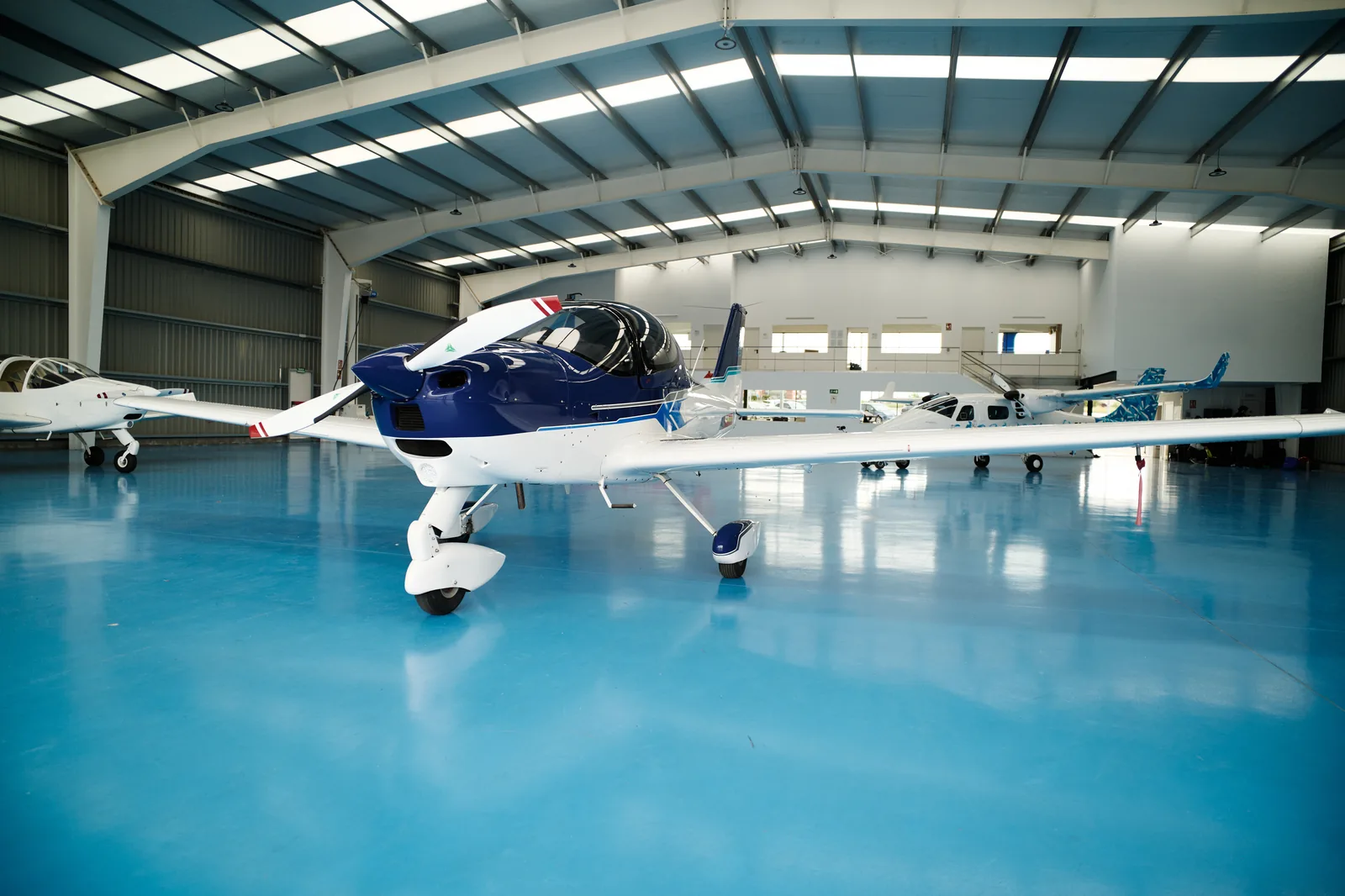
An aircraft hangar looks like a big garage, but the floor deals with a harder mix of loads and fluids.
- Hydraulic fluid. The fire-resistant phosphate-ester hydraulic fluids used in many aircraft soften and strip ordinary coatings. The topcoat has to be rated against them.
- Fuel, oil and de-icing fluid. Jet fuel, avgas, engine oil and glycol all end up on the floor over time.
- Point loads. Aircraft jacks and tail stands put a lot of weight onto a small footprint, and tugs turn on the spot.
- Hot tires. Tires coming off the runway can lift a thin coating the same way hot car tires do in a garage.
- Foreign object debris. A dropped rivet or safety wire on a dark floor can end up in an engine. A bright floor makes it visible.
How We Build a Hangar Floor
- Diamond grind and repair. The slab is ground open, cracks and spalled joints are filled, and oil-soaked areas are degreased and ground back.
- Moisture test. Hangar slabs on low ground near the Fraser often carry moisture. A mitigating primer goes down where the reading calls for it.
- High-build epoxy base. A thick 100% solids epoxy body coat, usually in a light grey or white to brighten the space.
- Chemical-resistant topcoat. A urethane or polyaspartic topcoat rated for hydraulic fluid and fuel, with a fine grit added where fluids get spilled.
- Markings. Aircraft parking lines, tug paths, walkways and safety zones painted in the same job.
Maintenance shops, offices and parts rooms in the same building usually get a lighter system. Heavier industrial areas and chemical rooms are covered on the industrial flooring page.
Why Hangar Floors Are Usually Light Grey or White
A dark concrete floor absorbs light. A light, high-gloss epoxy floor reflects it back up onto the underside of the wings and fuselage, where mechanics spend much of their day. That means fewer shadows, less need for work lights, and dropped hardware that is easy to spot.
The trade-off is that light floors show tire marks and fluid stains more. The chemical-resistant topcoat means those marks clean off rather than soak in, and a flake broadcast in lighter tones can hide everyday wear while keeping the space bright. Decorative options are shown on our flake flooring page.
Hangar Floor Coating Cost
Hangar floors are priced like other commercial and industrial floors, $8 to $16 per square foot installed in Greater Vancouver. The chemical-resistant topcoat, the amount of oil contamination and joint repair, and markings move a floor within that range.
| Hangar | Approx. size | Typical range |
|---|---|---|
| T-hangar or single aircraft | 1,000 to 1,500 sq ft | $8,000 to $24,000 |
| Multi-aircraft or flight school hangar | 3,000 to 5,000 sq ft | $24,000 to $80,000 |
| Maintenance or charter hangar | 8,000 sq ft and up | Quoted after site assessment |
Ranges include grinding, crack and joint repair, the coating system and cleanup. Moisture mitigation, removal of old coatings and markings are assessed on site and included in your written quote. GST (5%) is additional.
Hangar Floors Across the Lower Mainland
We serve hangar owners and operators throughout the region, including Vancouver International's south side, Boundary Bay in Delta, Langley Regional, Pitt Meadows Regional, and Abbotsford International. Work inside airport grounds is scheduled around your access and security arrangements.
Aircraft Hangar Flooring: Frequently Asked Questions
Book a Free Hangar Floor Assessment
We check the slab, the fluids it sees and your access arrangements, then send a written quote with the system, markings and a schedule around your aircraft.