Residential Epoxy Flooring Vancouver
Residential epoxy flooring is a coating bonded to the concrete slab inside a home: basements, slab-on-grade kitchens, mudrooms, laundry rooms and bathrooms. It is joint-free, highly water-resistant on its surface and wipes clean, and it comes in solid colours, flake, quartz and metallic finishes. The one hard rule is the floor underneath. It has to be concrete.
Rooms We Coat Inside the Home
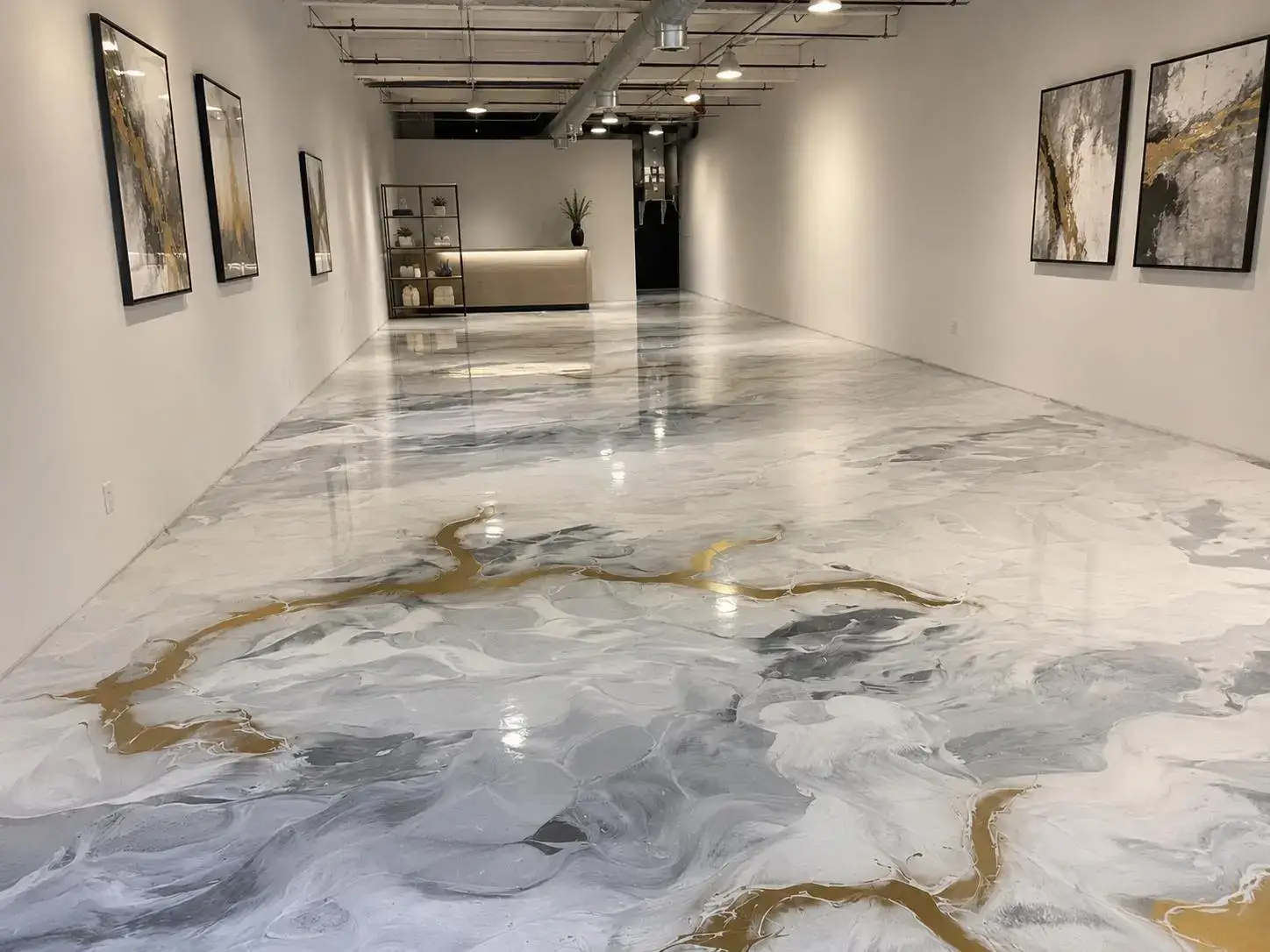
A residential epoxy floor goes wherever a home has a concrete slab. In Greater Vancouver that is most basements, the ground floor of slab-on-grade homes and laneway houses, and the utility rooms and entries off a garage. Upper floors framed in wood are the exception, and we say so at the assessment rather than coat a floor that will crack.
| Room | Usual system | Why |
|---|---|---|
| Basement living areas and suites | Solid colour, flake or metallic over a moisture-tested slab | Replaces carpet that traps damp; a vapour barrier primer handles slab moisture |
| Kitchens on a concrete slab | Solid colour or metallic, satin topcoat with fine grit near the sink | No grout lines for grease; wipes clean |
| Bathrooms | Quartz broadcast or solid colour with anti-slip | Most grip on a wet floor; one continuous surface |
| Mudrooms and entries | Flake | Hides grit and wet boot prints between cleanings |
| Laundry and utility rooms | Flake or solid colour | Stands up to detergent spills and a leaking washer |
| Home gyms and hobby rooms | Flake or solid colour | Takes dropped weights and rolling equipment better than vinyl |
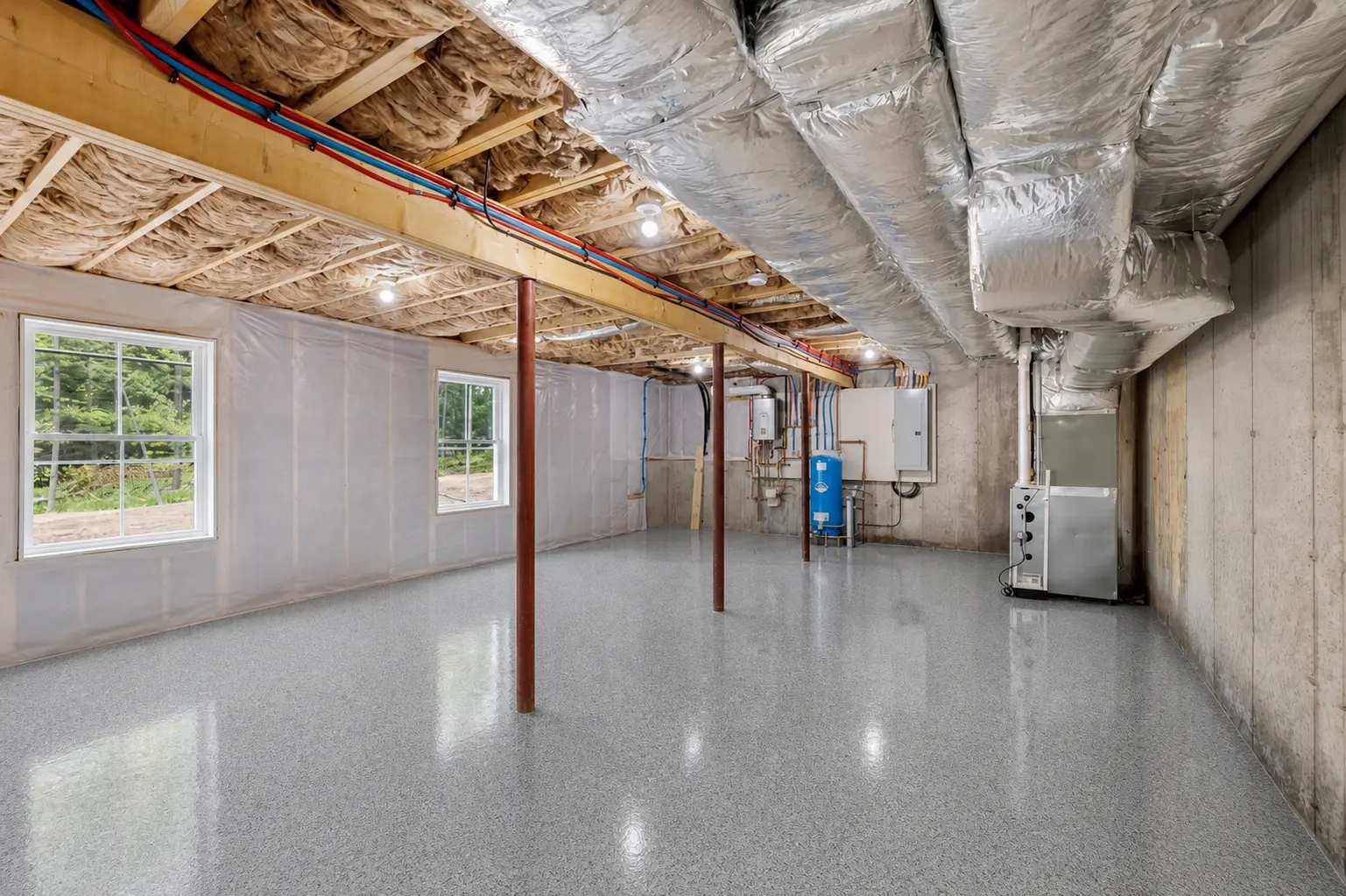
Basements have their own page because moisture drives most of the decisions down there; see basement epoxy flooring. The finish options are shown on the metallic, solid colour, flake and quartz pages.
Why It Has to Be Concrete
An epoxy floor is only as good as what it bonds to. On concrete, the coating keys into a ground surface and moves as little as the slab does. On anything else it fails in predictable ways.
- Wood subfloors and plywood. Wood expands and shrinks with the seasons, and the seams between sheets move independently. A rigid coating tends to crack along those seams.
- Tile. A coating over tile bonds to the glaze and the grout, not the slab, and the grout lines tend to show through. The tile comes off, the thinset is ground flush and the concrete is coated. Our concrete grinding page covers the removal.
- Vinyl, laminate and old carpet glue. All removed down to concrete, then ground and coated.
- Condo slabs. The concrete itself is fine, but many strata bylaws require an acoustic underlay under hard flooring to limit noise to the unit below, and a bonded coating has none. Get council approval before booking.
What an Epoxy Floor Is Like to Live On
People who put epoxy in a garage love it. Inside the house the trade-offs matter more, and it is better to know them before the floor goes down.
What people like
One continuous surface with no grout lines, so spills stay on top and a damp mop cleans it. Highly resistant to water, pet accidents and stains. A metallic or solid colour floor reads as a finished interior floor, not a garage. It typically lasts 10 to 15 years, with no sanding and refinishing cycle like hardwood.
What to plan for
It is hard underfoot, like tile, and a dropped glass will break. It feels cool, because the concrete does. A glossy finish can be slippery in socks or when wet, so kitchens and bathrooms get a satin topcoat with fine grit. Cracks in the slab can show through over time, which is why they are routed and filled first.
Heated floors are the best fix for the chill. Epoxy works well over a slab with in-floor radiant heating, because the thin coating lets the heat straight through. We locate the heating runs before grinding, grind lightly over the heated area, and have the heat turned off while the coating goes down and cures.
How an Interior Floor Goes In
Inside a lived-in house, the job is as much about containment as coating. This is how we do it.
- Assessment. We confirm the floor is concrete, check for in-floor heating, moisture test the slab and look at doorways and transitions to other flooring.
- Containment. The room is sealed off with plastic, doorways are taped and the grinders run on HEPA vacuums so dust stays in the room.
- Grinding and repair. Old flooring and adhesive come off, the slab is ground to profile, and cracks are routed and filled with flexible polyurea.
- Coating. Primer, a moisture vapour barrier where the test calls for it, then the base coat and finish you picked, with anti-slip where the room needs it.
- Transitions. Edges at door frames and where the floor meets carpet or hardwood are finished cleanly.
Most single rooms are done in 1 to 2 days. We use low-VOC, professional-grade systems from top North American manufacturers and ventilate while we work. Kids and pets stay out of the room until it has cured, and your written quote includes the timing.
Residential Epoxy Flooring Cost
Inside the home, epoxy runs $5 to $10 per square foot for solid colour, $6 to $12 for flake and polyaspartic systems and $12 to $18 for metallic, installed. Small rooms such as a bathroom, laundry room or mudroom are usually quoted as a flat project price because the setup is the same whatever the size, and small projects start around $1,500. A finished basement typically lands between $3,000 and $7,500.
Removing tile, vinyl or old adhesive and any moisture mitigation the slab needs are assessed on site and included in your written quote. GST (5%) is additional. Full ranges by system are in the Vancouver epoxy flooring cost guide.
Want the counters to match? We also pour epoxy countertops over existing laminate, wood or concrete tops in the same metallic and stone-look finishes.
Epoxy Floors Inside the Home: Frequently Asked Questions
Residential Epoxy Floors Across Greater Vancouver
We coat basements, kitchens, bathrooms and utility rooms on concrete slabs throughout Metro Vancouver and the Fraser Valley.
Get a Free Residential Floor Assessment
Tell us which room and what is on the floor now. We will confirm it is concrete, test the slab and send a written quote with the finish options that suit the room.