ESD, Laboratory & Healthcare Flooring Vancouver
Anti-static (ESD) epoxy floors carry static charge safely to ground, so a person walking across the room does not zap a circuit board, a server or a sensitive instrument. Built with a conductive primer, copper grounding strips and a static-dissipative topcoat, they are tested with a resistance meter before handover. We install ESD floors in electronics assembly, server and data rooms, and labs, along with the chemical-resistant, joint-free floors that laboratories, clinics and pharmacies need.
How an ESD Epoxy Floor Works
People build up static charge just by walking, especially in dry winter air with the heat on. A standard epoxy floor is an insulator, so that charge stays on the person until they touch something. Electronics can be damaged by a discharge far too small to feel. An ESD floor gives the charge a controlled path to ground instead.
- Prepare and prime. The slab is diamond ground and primed like any resin floor.
- Lay the grounding grid. Self-adhesive copper strips are laid on the primer and connected to the building ground at set points.
- Conductive layer. A conductive primer or base coat ties the strips into one continuous layer across the room.
- Static-dissipative topcoat. The finished surface lets charge drain slowly and safely, at a controlled rate, down to the grid.
- Test. Surface resistance and resistance to ground are measured across the room with a meter, and the readings are recorded for your records.
An ESD floor works as part of a system. Staff in sensitive areas still need ESD footwear or heel grounders, and the room's humidity matters. We will talk through the rest of the setup at the assessment.
Choosing the Right Anti-Static Floor
There are two grades of static-control floor, and the right one depends on what is in the room.
| Type | How fast charge drains | Typical rooms |
|---|---|---|
| Static dissipative | Slower, controlled drain | Electronics assembly, server and data rooms, control rooms, most labs |
| Conductive | Faster drain to ground | Areas handling flammable vapours or sensitive components, where the spec calls for it |
If your equipment supplier, insurer or quality standard gives a resistance range, send it to us before the assessment and the floor is specified to hit it. If there is no written spec, a static-dissipative floor is the usual starting point.
Laboratory Flooring That Stands Up to Chemicals
Lab floors take spilled solvents, acids, bases and cleaning agents, often on a daily basis. They also have to be easy to decontaminate, which rules out anything with seams, grout lines or porous concrete.
- Chemical-resistant resin. Novolac epoxy or urethane systems where solvents and acids are handled, chosen against the chemicals you actually use.
- Joint-free surface. One continuous floor with no seams for spills to get under.
- Integral cove base. The floor curves up the wall so spills and cleaning water cannot reach the corner.
- ESD where needed. Instrument rooms and electronics benches can get a static-dissipative finish in the same job.
Send us the chemical list for the lab at the quote stage. It decides which resin goes down, and it saves a floor from being specified for chemicals it will never see, or missing one it will.
Floors for Clinics, Pharmacies and Care Facilities
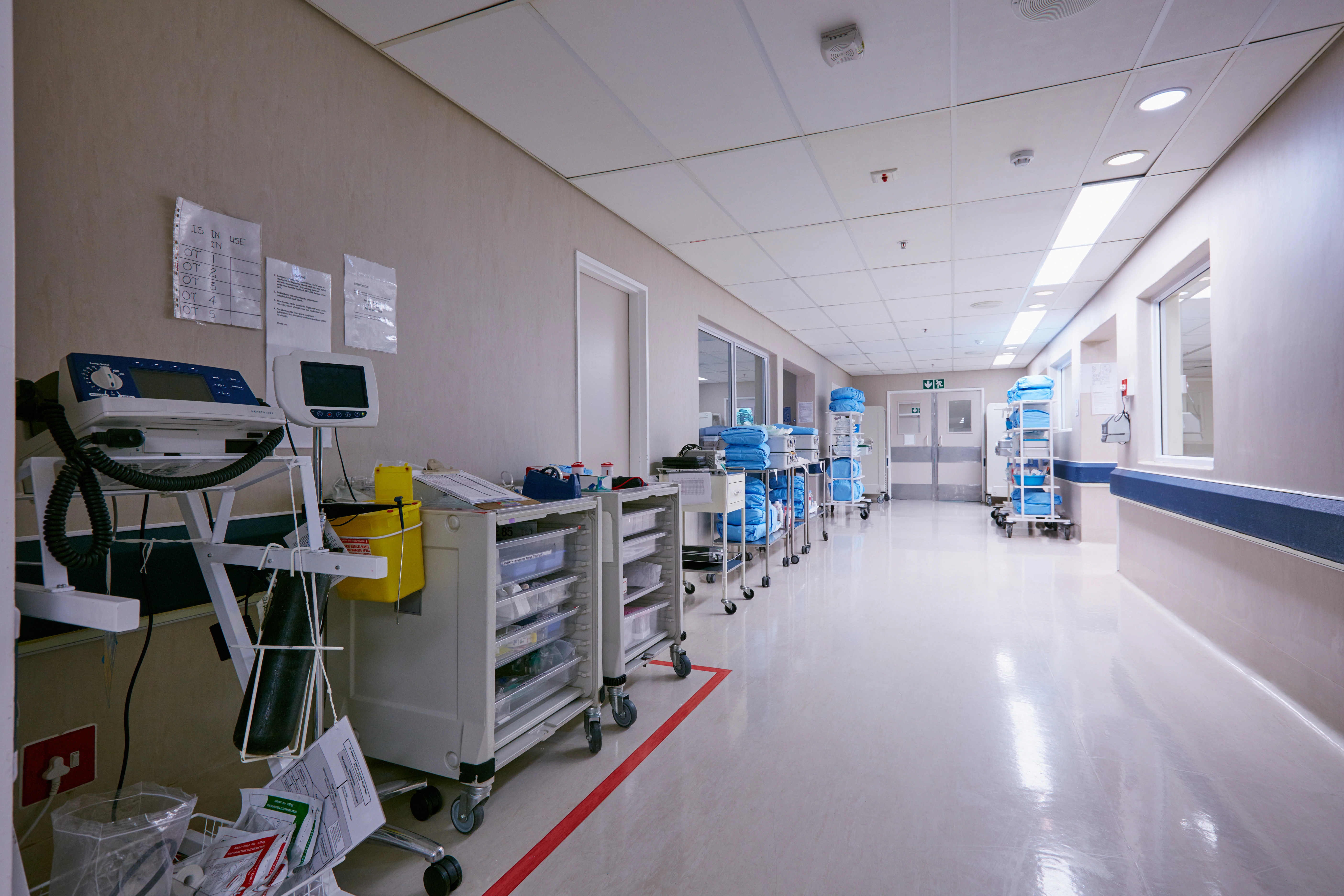
Resin floors suit the parts of a healthcare building where cleaning, spills and hard use matter more than a soft finish underfoot: clinic back-of-house, pharmacies and compounding rooms, sterilization and soiled utility rooms, mechanical rooms, loading areas, and veterinary clinics and kennels.
- Cleanable. A joint-free, non-porous surface that stands up to hospital-grade disinfectants.
- Coved edges. No corner for dirt and moisture to collect.
- Slip resistance. A fine aggregate in wet rooms, matched to the cleaning routine.
- Phased work. Rooms done one at a time so the facility keeps operating, with overnight and weekend installs available.
Patient rooms and corridors in hospitals are usually sheet flooring chosen by the design team, and we do not try to sell resin into those spaces. Where a resin floor is the right choice, we quote it with the same detail as any commercial job. See our commercial epoxy flooring page for other facility types.
ESD and Lab Floor Cost
Commercial epoxy floors in Greater Vancouver typically run $8 to $16 per square foot installed. ESD floors and chemical-resistant lab floors sit toward the top of that range and sometimes above it, because of the grounding grid, the conductive layers, the testing, and the specialty resins. Each one is quoted after a site assessment so the price reflects the actual spec.
Your written quote lists the system, the resistance range it is built to meet, the testing, cove base, and any concrete or moisture work the slab needs. GST (5%) is additional.
ESD and Laboratory Flooring: Frequently Asked Questions
ESD and Lab Floors Across Greater Vancouver
We install static-control, laboratory and healthcare floors throughout Metro Vancouver and the Fraser Valley.
Book a Free ESD or Lab Floor Assessment
Send us your spec or chemical list, and we will build the quote around it: system, resistance range, testing and a schedule that works around your operations.