Urethane Cement & Food-Grade Flooring Vancouver
Food and beverage plants need urethane cement, not standard epoxy. Hot washdowns, boiling spills, freezer doors and food acids crack and lift an ordinary coating within a year. Urethane cement is a thick, cement-based resin floor that takes thermal shock, stays bonded on damp concrete and cleans to a sanitary finish. We install it in processing plants, breweries, wineries, bakeries and commissaries across Greater Vancouver, with cove bases and drains built in.
Why Food Plants Use Urethane Cement Instead of Epoxy
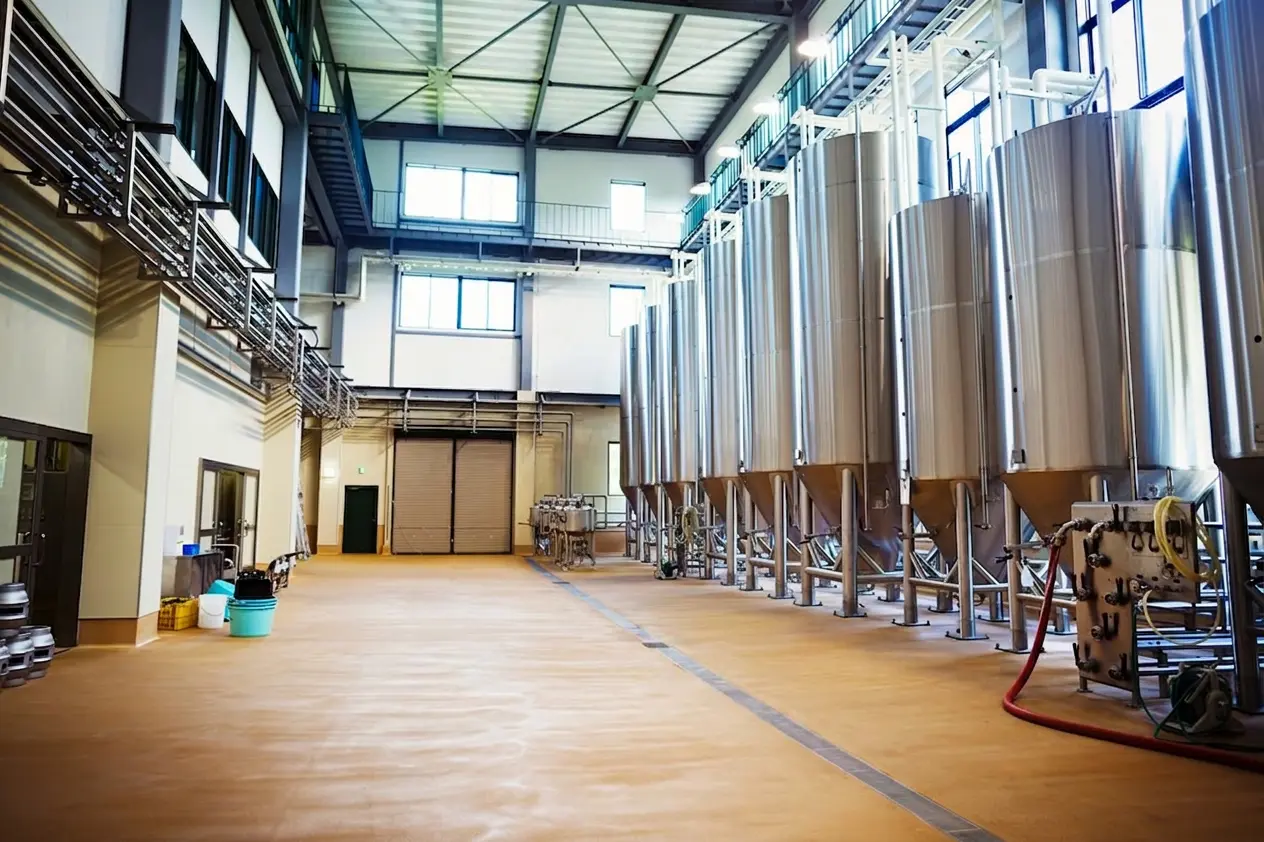
Epoxy is a hard, rigid floor, and it is excellent in a warehouse or a garage. In a food plant it runs into three things it cannot handle for long.
- Thermal shock. A steam or hot water washdown on a cold slab, or boiling wort hitting the floor, makes the coating expand faster than the concrete under it. Epoxy cracks and lets go. Urethane cement moves with the slab.
- Moisture. Food plants are wet from above and often from below. Urethane cement bonds to damp concrete that would blister an epoxy floor.
- Food acids and sugars. Lactic acid from dairy, blood and fats from meat, sugars and citric acid from juice and beverage lines all attack standard epoxy. Urethane cement is built to resist them.
For those reasons urethane cement is the standard floor in most modern food and beverage plants. Epoxy still has a place in dry storage, packaging and office areas of the same building, and we quote those separately so you are not paying urethane cement prices where you do not need it.
Food Processing Flooring by Area
| Area | System | Why |
|---|---|---|
| Processing rooms and washdown areas | Urethane cement slurry or trowel-applied build | Hot washdowns, acids, constant water |
| Brewhouse and cellar | Heavy trowel-applied urethane cement | Boiling wort, caustic cleaning, heavy tanks |
| Coolers and freezers | Urethane cement rated for low temperatures | Cold slab, door traffic, temperature swings |
| Commercial kitchens and commissaries | Urethane cement with quartz for grip | Grease, hot oil, daily mopping |
| Dry storage, packaging, offices | Epoxy or sealed concrete | Dry, light traffic, lower cost |
Kitchens in restaurants, hotels and food courts have their own page: commercial kitchen flooring. Wet areas that need grip without the full urethane cement build often suit a quartz broadcast floor.
Cove Base, Drains and a Joint-Free Surface
Inspectors look at the edges of a food plant floor as much as the middle. Bacteria collect wherever the floor meets the wall, a drain or a piece of equipment, so those details are part of the floor rather than an add-on.
- Integral cove base. The floor material curves up the wall, usually 100 to 150 mm, so there is no corner for water and debris to sit in.
- Drains and trenches. The floor is sloped to drains and bonded into the drain body, so washdown water leaves the room instead of pooling.
- Joints and equipment bases. Control joints are detailed so the floor stays sealed across them, and equipment plinths are wrapped in the same system.
- Texture. A graded aggregate gives grip on a wet, greasy floor while still cleaning with a squeegee and hose.
The result is a joint-free, non-porous surface that holds up to daily sanitation, which is what food safety inspections look for.
Brewery and Winery Flooring
Craft breweries and wineries are some of the hardest floors in the region. The brewhouse sees boiling liquid and caustic cleaning, the cellar takes heavy fermenter loads and constant water, and spent grain and yeast are acidic. A floor that cracks lets water into the slab under the tanks, which is expensive to fix once the tanks are full.
We build brewhouse and cellar floors with a heavier trowel-applied urethane cement, slope them to trench drains, and cove the walls. Taprooms and retail areas can get a decorative flake or metallic floor instead, since they see customers rather than washdowns.
Installing Around Your Production Schedule
Most plants cannot stop for long. Urethane cement cures faster than many people expect, and the work is planned around your shutdowns.
- Phased rooms. One processing room or line at a time while the rest of the plant keeps running.
- Overnight and weekend installs can be arranged around production and sanitation windows.
- Low-odour materials in areas next to open product, agreed with you before the work is scheduled.
Return-to-service times depend on the build and the room temperature, and they are written into your quote so production can plan around them.
Urethane Cement Flooring Cost in Vancouver
Urethane cement floors in Greater Vancouver typically run $10 to $14 per square foot installed. Thin slurry builds in lighter-duty areas sit at the lower end; heavy trowel-applied builds for brewhouses and hot washdown rooms sit at the top. Cove base, drain detailing and concrete repair are measured on site.
| Space | Approx. size | Typical range |
|---|---|---|
| Commissary or small processing room | 500 to 1,000 sq ft | $5,000 to $14,000 |
| Brewhouse and cellar | 1,500 to 3,000 sq ft | $15,000 to $42,000 |
| Processing plant floor | 5,000 sq ft and up | Quoted after site assessment |
Ranges include grinding, the urethane cement system and cleanup. Cove base, drain work, concrete repair and removal of old flooring are assessed on site and included in your written quote. GST (5%) is additional.
Food and Beverage Floors Across Greater Vancouver
We work in food and beverage facilities throughout Metro Vancouver and the Fraser Valley, including the processing areas of Richmond, Delta, Surrey, Burnaby and Langley, and the brewery and winery clusters from East Vancouver to the Fraser Valley.
Warehouses and distribution floors in the same building are covered on the industrial and warehouse flooring page.
Urethane Cement Flooring: Frequently Asked Questions
Book a Free Food Plant Floor Assessment
We look at the rooms, the washdown routine and the drains, then send a written quote with the system for each area and a schedule around your production.