Industrial & Warehouse Epoxy Flooring Vancouver
Industrial epoxy flooring in Vancouver runs $8 to $16 per square foot installed, and the spread comes down to three things: the traffic the floor takes, what gets spilled on it, and the condition of the slab underneath. We build warehouse and plant floors as 100% solids epoxy over a diamond-ground slab, with quartz or silica broadcast where forklifts turn and a chemical-resistant novolac layer where fuel, oil or solvents land. Large floors are done in zones so the building keeps running.
What Makes a Floor Industrial Grade
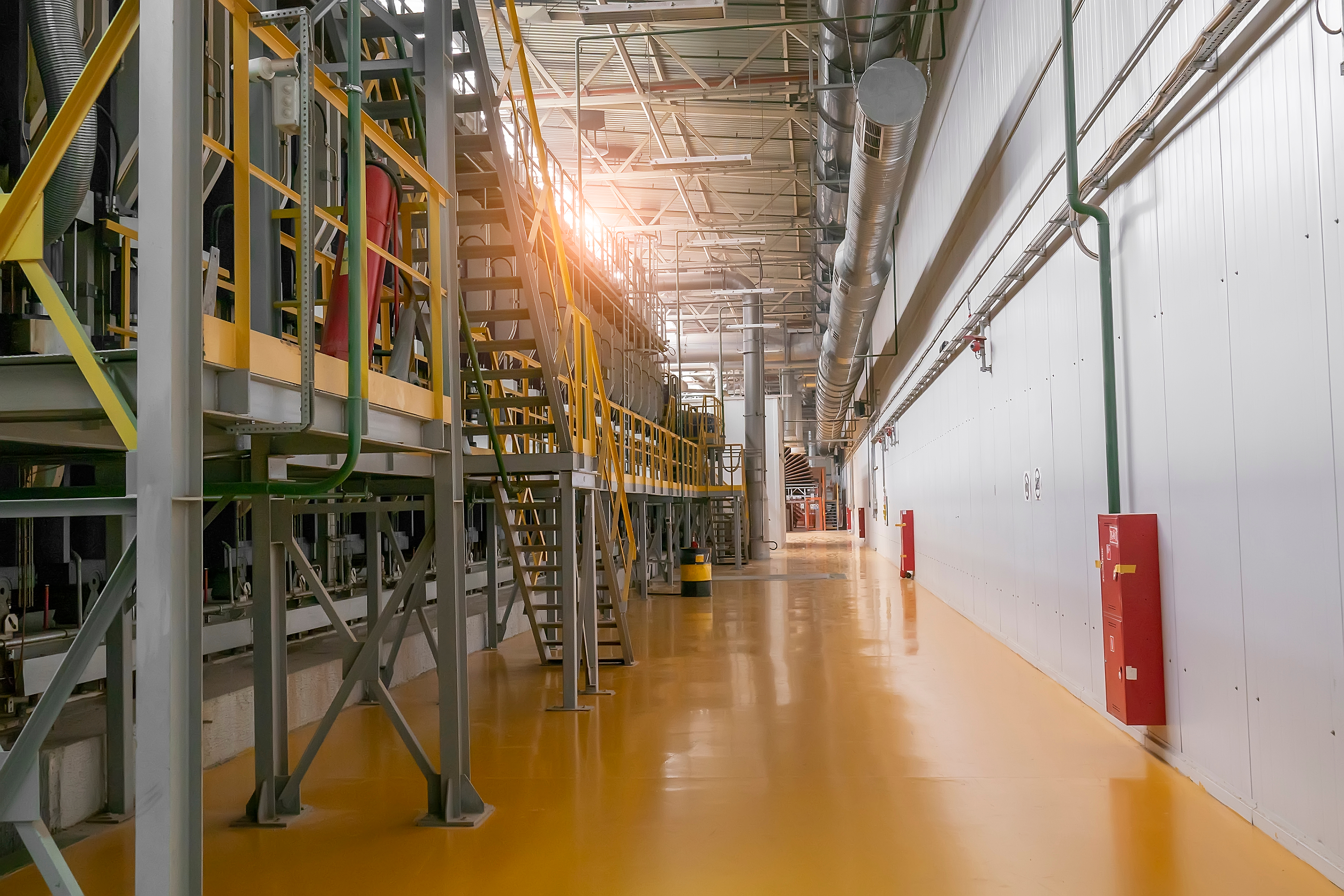
A garage floor sees a car parked on it twice a day. A warehouse floor sees a loaded forklift pivot on the same square metre hundreds of times a shift, pallets dragged across it, and a pressure washer at the end of the week. Industrial epoxy flooring is built for that difference: thicker, harder, and bonded to concrete that has been ground open rather than washed.
Three things separate an industrial floor from a residential or retail coating:
- Build thickness. A residential floor is a thin film. An industrial floor is a high-build or broadcast system several times thicker, so a dropped load chips the top layer rather than exposing concrete.
- 100% solids resin. No solvent to evaporate, so what goes down is what stays on the floor. It is also low odour, which matters when the building next door is still working.
- Mechanical preparation. Every slab is diamond ground to a rough profile. We do not acid etch industrial floors. How long the coating lasts is decided at this step more than any other.
This page covers warehouses, distribution centres, manufacturing plants, fabrication and machine shops, and auto service bays. Retail, showroom and office floors are covered on our main commercial epoxy flooring page.
Industrial Epoxy Floor Coating Systems Compared
Most warehouses end up with more than one system on the same floor: a tougher build in the aisles and at the dock doors, and a lighter one in racking and office areas where nothing heavier than a pallet jack moves.
| System | Where it goes | What it handles |
|---|---|---|
| High-build epoxy with urethane or polyaspartic topcoat | Racking areas, storage, light assembly | Pallet jacks, foot traffic, abrasion, easy cleaning |
| Quartz or silica broadcast epoxy | Forklift aisles, loading docks, ramps, wash areas | Turning wheels, impact, wet floors that still need grip |
| Novolac epoxy | Fuel and battery charging areas, chemical storage, plant floors | Solvents, oils, acids and fuel that soften standard epoxy |
| Grind and seal or polished concrete | Large dry storage with light traffic | Dust control and reflectivity at the lowest cost per foot |
The system choice is made at the site assessment, not from a price sheet. A floor that only sees pallet jacks does not need a quartz build, and a floor with a battery charging bay should not get a standard topcoat there. If you are weighing a coating against bare concrete, our polished concrete page covers grind and seal and full polish, and where each one makes sense in an industrial building.
Warehouse Floor Epoxy for Forklifts and Pallet Traffic
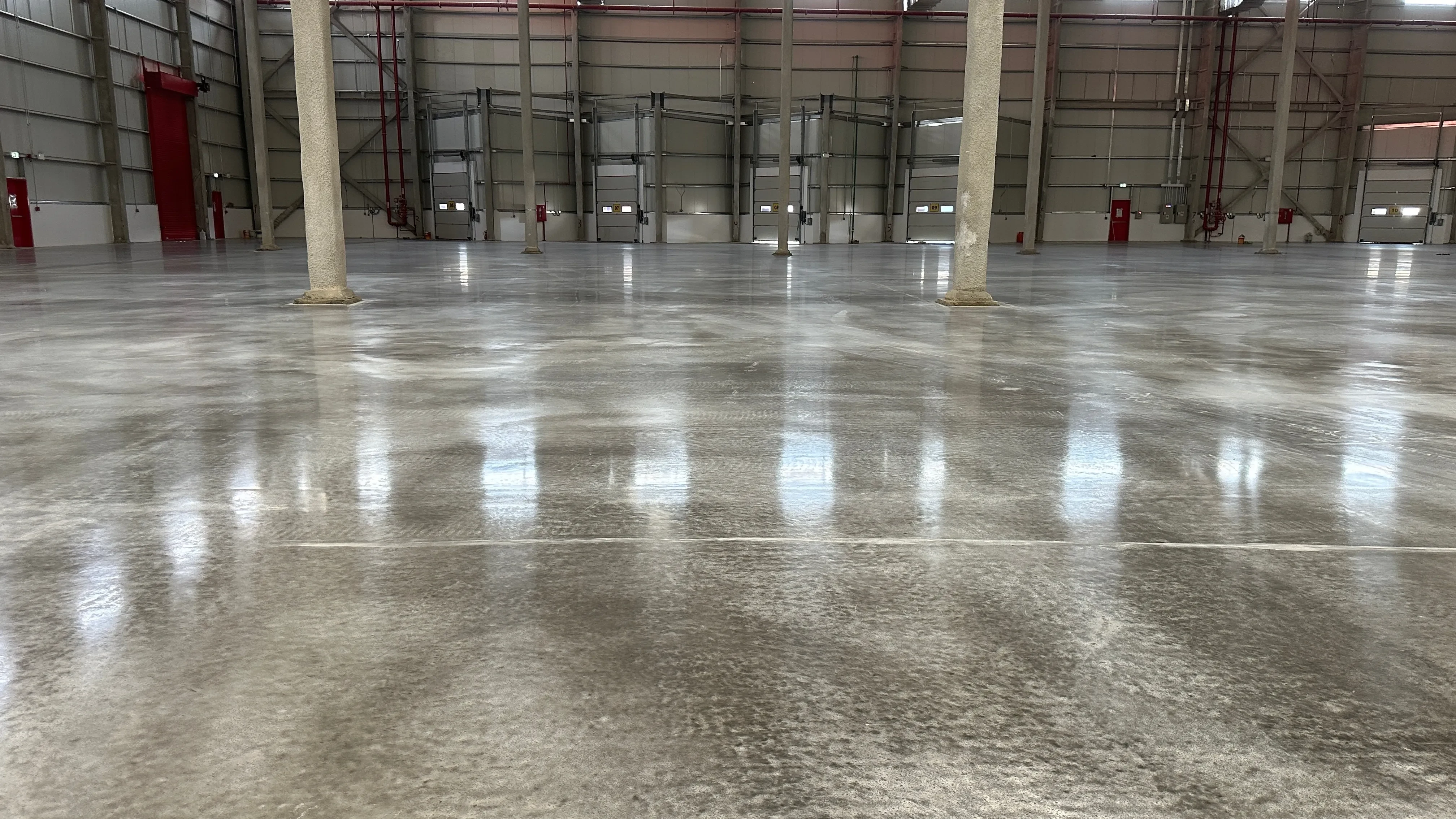
Forklifts do not wear a floor evenly. The damage concentrates where they turn, brake and cross a joint, so that is where the build goes thickest. Hard polyurethane forklift tires pivoting in place will scuff through a thin coating in months. A broadcast system gives those areas a wearing layer that can take it.
- Map the traffic. At the assessment we walk the floor with whoever runs it and mark the travel lanes, turning points, dock plates and charging stations.
- Rebuild the control joints. Spalled joint edges are where forklift wheels break a floor apart. They get cut out and filled with a semi-rigid filler that supports the wheel as it crosses.
- Thicken the lanes. Aisles and docks get the quartz or silica broadcast build. Racking areas get a high-build epoxy.
- Mark the floor. Aisle lines, pedestrian walkways and hazard zones are painted in the same job, in a coating that bonds to the floor rather than sitting on top of it.
Dock areas also take water and grit off every truck that backs in. Those get the most slip resistance on the floor, built into the topcoat rather than applied as tape.
Vancouver Warehouse Slabs and Why They Fail
Most of the industrial stock in Metro Vancouver is tilt-up concrete from the 1970s to the 2000s, much of it on low, wet ground near the Fraser. The same problems show up again and again, and every one of them has to be dealt with before a coating goes down.
| Problem | Where we see it | What we do first |
|---|---|---|
| Moisture vapour from below | Richmond, Delta and other low-lying areas with a high water table | Moisture test every slab, mitigating primer where the reading calls for it |
| Oil-soaked concrete | Auto service, fleet yards, older machine shops | Degrease, grind past the contamination, test adhesion before coating |
| Failed old coatings or paint | Buildings that have changed tenants | Grind it all off; we do not coat over a previous tenant's floor |
| Spalled joints and cracks | Any slab with years of forklift traffic | Cut out and fill before coating so the wheel has support |
| Uneven slab or low spots | Older additions and patched areas | Grind high spots, fill low spots, discussed with you at the assessment |
Moisture is the one people skip, and it causes most of the peeling floors we are called to replace. Vancouver's water table means a warehouse slab can look dry and still be pushing vapour up through the concrete. We test before we quote the system.
Crack work on smaller slabs is explained on the concrete crack repair page, and why moisture matters so much in this climate is covered in our guide to moisture vapour and epoxy floors.
Phased Installs and Downtime
Very few warehouses can close for a week. The usual answer is to split the floor into zones and coat one while the others keep working, moving racking and stock between phases. The schedule is agreed in writing before any work starts.
- Zoned phases. Large floors are done in sections, with the building open around them.
- Overnight and weekend installs can be arranged for floors that cannot give up any working hours.
- Fast-cure topcoats where return to service matters most, such as a single dock or a busy aisle.
- Dust-controlled grinding. Grinders run with vacuum extraction, so the rest of the building is not covered in concrete dust.
Foot traffic, pallet jacks and forklifts come back at different points in the cure. Those times depend on the system and the temperature in the building, and they are written into your quote so you can plan around them.
Warehouse Epoxy Flooring Cost in Vancouver
Industrial and warehouse epoxy floors in Greater Vancouver typically run $8 to $16 per square foot installed. Larger open floors trend toward the lower end, because setup and equipment spread across more footage. Novolac areas, heavy joint repair and moisture mitigation push toward the top.
| Floor | Approx. size | Typical range |
|---|---|---|
| Shop bay or small unit | 1,500 to 2,500 sq ft | $12,000 to $40,000 |
| Warehouse unit | 5,000 sq ft | $40,000 to $80,000 |
| Distribution or plant floor | 10,000 sq ft and up | Quoted after site assessment |
Ranges include diamond grinding, crack and joint repair, the coating system and cleanup. Moisture mitigation, removal of old coatings and line marking are assessed on site and included in your written quote. GST (5%) is additional.
What moves a quote most, in order: how much prep the slab needs, the system mix across the floor, the square footage, and whether the work has to happen around your hours. Residential and retail pricing is laid out in the Vancouver epoxy flooring cost guide.
Industrial Floors Across Metro Vancouver and the Fraser Valley
We work in the industrial parks where most of the region's warehouse space sits, including Campbell Heights and Port Kells in Surrey, Tilbury and Annacis Island in Delta, Bridgeport and the Riverside area in Richmond, the Gloucester industrial estate in Langley, Big Bend in Burnaby, and the industrial areas of Coquitlam, Abbotsford and Maple Ridge. Larger commercial and industrial projects are taken on anywhere in BC.
Food processing and commercial kitchens need a different system again, with cove bases and drains built in, and are covered on our commercial kitchen flooring page. High-slip wet areas often suit a quartz broadcast floor.
Industrial Epoxy Flooring: Frequently Asked Questions
Get a Free Industrial Floor Assessment
We walk the floor, test the slab and map the traffic, then send a written quote with the system, the schedule and the prep work already in it.