Short answer: To clean concrete floors, sweep, then scrub with warm water and a pH-neutral cleaner using a stiff nylon brush, rinse, and let the floor dry. Epoxy and polyaspartic floors are easier: a pH-neutral cleaner, a microfibre mop or squeegee, and no vinegar, citrus, soap or abrasive pads.
Floors in Greater Vancouver get a particular kind of dirty. From October to April, garages fill with wet grit and, in a cold snap, the salt brine that trucks spread on the roads. Basements get damp and musty. Shops pick up oil, rust and tire marks all year. The right way to clean each depends first on one thing: whether the concrete is bare, sealed, or coated.
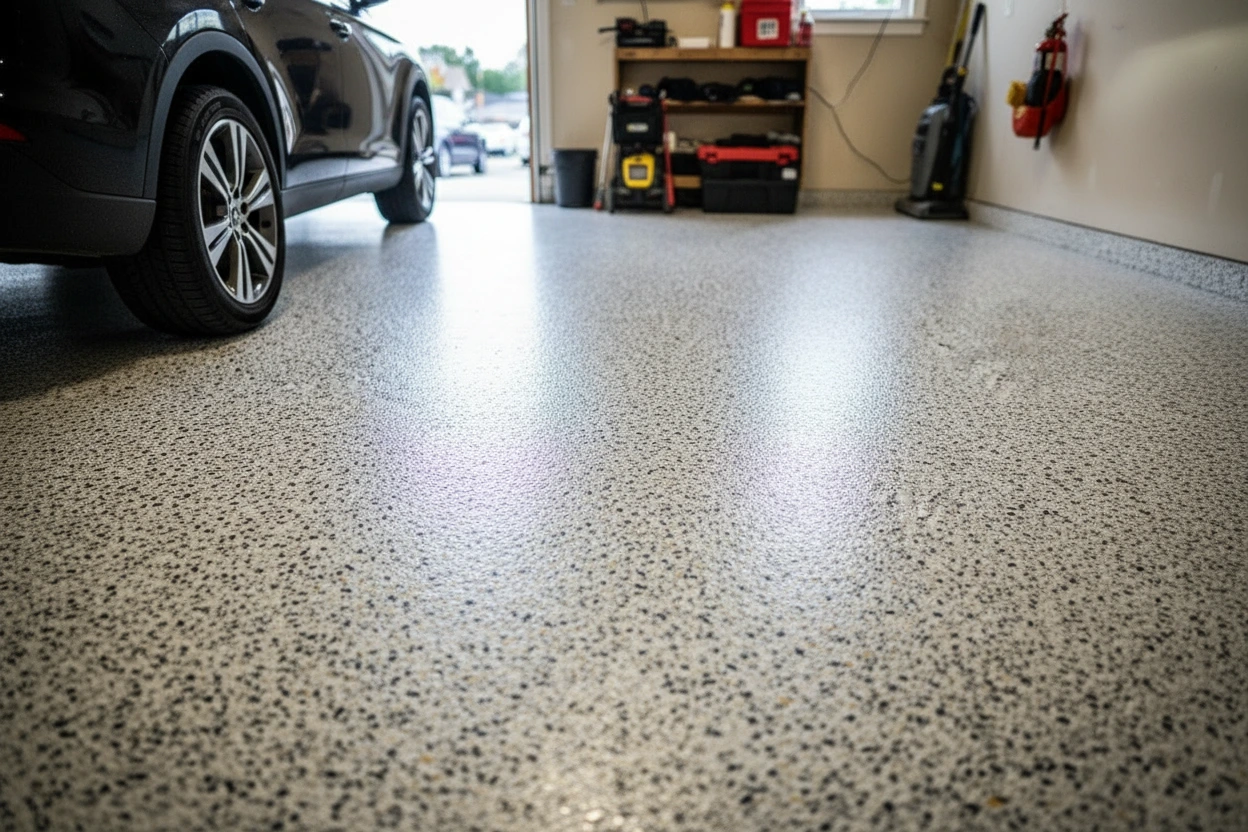
Bare, Sealed or Coated Concrete Floors
| Floor | How it behaves | Best cleaner | Avoid |
|---|---|---|---|
| Bare concrete | Porous, soaks up oil and water, dusts | Mild detergent or pH-neutral cleaner, stiff nylon brush | Wire brushes, strong acids unless you know what you are doing |
| Sealed concrete | Sheds water, stains less, sealer wears in traffic lanes | pH-neutral cleaner | Harsh degreasers left to sit, which can soften some sealers |
| Epoxy or polyaspartic coating | Non-porous, dirt sits on top | pH-neutral cleaner, or a little ammonia in hot water for a deep clean | Vinegar, citrus, soap, bleach mixes, steel wool, wax |
Not sure which you have? Drip a little water on a clean spot. If it darkens the concrete and soaks in within a minute, the floor is bare or the sealer has worn off. If it beads, the floor is sealed or coated.
How to Clean Concrete Floors
Bare concrete cleans well with warm water, a mild cleaner and some scrubbing. The mistake most people make is flooding it. Concrete holds water, and in a Vancouver basement that dampness feeds mildew for days.
- Clear and sweep. Move what you can and sweep or vacuum. Grit acts like sandpaper under a brush.
- Treat stains first. Oil, rust and mildew spots get their own treatment before the general wash (see the stain table below).
- Mix the cleaner. Warm water with a pH-neutral floor cleaner or a mild detergent at the dilution on the label.
- Scrub. A stiff nylon deck brush, working in sections. On a large floor, a rented floor scrubber saves a lot of time.
- Rinse. Clean water, then squeegee it toward the drain or the door. Leftover cleaner attracts dirt.
- Dry. Open the garage door or run a fan and dehumidifier in a basement until the floor is dry to the touch.
Basement concrete and mildew
A musty basement floor is usually a moisture problem first and a cleaning problem second. Clean the mildew off, then deal with where the water comes from: a downspout emptying against the foundation, a dryer vent, or vapour coming up through the slab. Our guide to moisture vapour in Vancouver concrete explains the last one.
How to Clean an Epoxy or Polyaspartic Floor
A coated floor is the easiest floor in the house to clean, because nothing soaks in. Most of the time a dust mop and a squeegee are all it needs. For a wash:
- Dust mop or sweep to get the grit off before it scratches the topcoat.
- Wash with a pH-neutral cleaner in warm water. For a heavy clean, a small amount of clear household ammonia in hot water works well on epoxy and polyaspartic, as long as nothing else is mixed in.
- Use the right tool. A microfibre mop on smooth finishes. On flake and textured anti-slip floors, a soft deck brush and a squeegee work better than a mop, which snags on the texture and leaves streaks.
- Rinse and squeegee dry. Standing water leaves spots when it evaporates, especially when it carries road salt or grime.
What not to use on an epoxy floor
- Vinegar and citrus cleaners. Acidic, and repeated use dulls the gloss.
- Soap-based cleaners. They leave a film that looks hazy and is slippery when wet.
- Steel wool, scouring pads and wire brushes. They scratch the topcoat.
- Wax or floor polish. A coated floor does not need it, and it builds up into a slippery, yellowing layer.
- Mixing products. Never combine bleach with ammonia or acids.
Stains on Bare Concrete vs a Coated Floor
| Stain | Bare concrete | Epoxy or polyaspartic |
|---|---|---|
| Fresh oil or grease | Absorbent first, then a concrete degreaser and scrub | Wipe up, then a degreaser and rinse |
| Old oil stain | A poultice left to dry; may lighten rather than vanish | Rarely an issue, since oil sits on the surface |
| Road salt haze | Warm water scrub and a double rinse | pH-neutral wash and a double rinse |
| Tire marks | Degreaser and a stiff brush | Degreaser and a soft pad; a lighter, busier flake hides them |
| Rust | A rust remover made for concrete, tested on a small spot | Test any rust remover on a hidden area first, since some are acidic |
| Mildew | Diluted mildew cleaner or bleach, never mixed, with ventilation | pH-neutral cleaner usually lifts it; fix the damp |
A Vancouver Winter Routine for Garage Floors
The worst months for a garage floor here are the few weeks each winter when the roads are salted. Brine drips off the car, pools, and dries into a white crust. On bare concrete it works into the surface and, over a few winters, starts the surface flaking known as scaling, often called spalling.
- Put a mat or a containment tray where the car parks if the floor is bare.
- Squeegee meltwater out the door after each wet drive rather than letting it dry in place.
- Once a week during a cold snap, wash with warm water and a pH-neutral cleaner and rinse twice.
- After the season, give the whole floor a proper clean and check for chips or worn spots.
When Pressure Washing Is and Is Not a Good Idea
Pressure washing is fine for bare exterior concrete like driveways and patios, where it clears moss and grime quickly. Indoors, it pushes water into the slab and the walls. On a coated floor, a narrow tip held close can lift the coating at a chipped edge or a crack. If you use one on a coated garage floor, keep the pressure low, use a wide fan tip, and stay well back from the surface.
Cleaning Chemicals Safely
Garages and basements are small, closed spaces, so ventilation matters. Health Canada warns that it is never safe to mix bleach with other cleaning products, including ammonia and acids such as vinegar, because the combination releases toxic gas. Transport Canada's CANUTEC explains the risks of improper mixing of household cleaners in more detail. Use one product at a time, rinse between products, and open the door.
When Cleaning Is Not Enough
If a bare floor never looks clean no matter how you scrub it, the concrete itself is the problem: it is porous, stained deep, and dusting. At that point the fix is protecting the surface, not scrubbing harder. A penetrating concrete sealer makes the next spill easier to clean, and a garage epoxy floor or basement epoxy floor turns cleaning into a mop and a squeegee.
A coated floor is a quick clean. Oil, road salt and tire grime sit on top of an epoxy or polyaspartic topcoat instead of soaking into the slab, so a pH-neutral cleaner and a squeegee handle almost everything a Vancouver winter brings in.