Concrete Sealing Vancouver
Sealing is the lowest-cost way to protect a concrete floor that does not need a full coating. We clean or grind the slab and apply a penetrating or topical sealer that cuts concrete dust, blocks oil and road-salt stains, and slows water getting into the surface. It still looks like concrete, and it needs resealing every few years. When a floor needs more than that, we will say so at the assessment.
What Concrete Sealing Does and What It Does Not
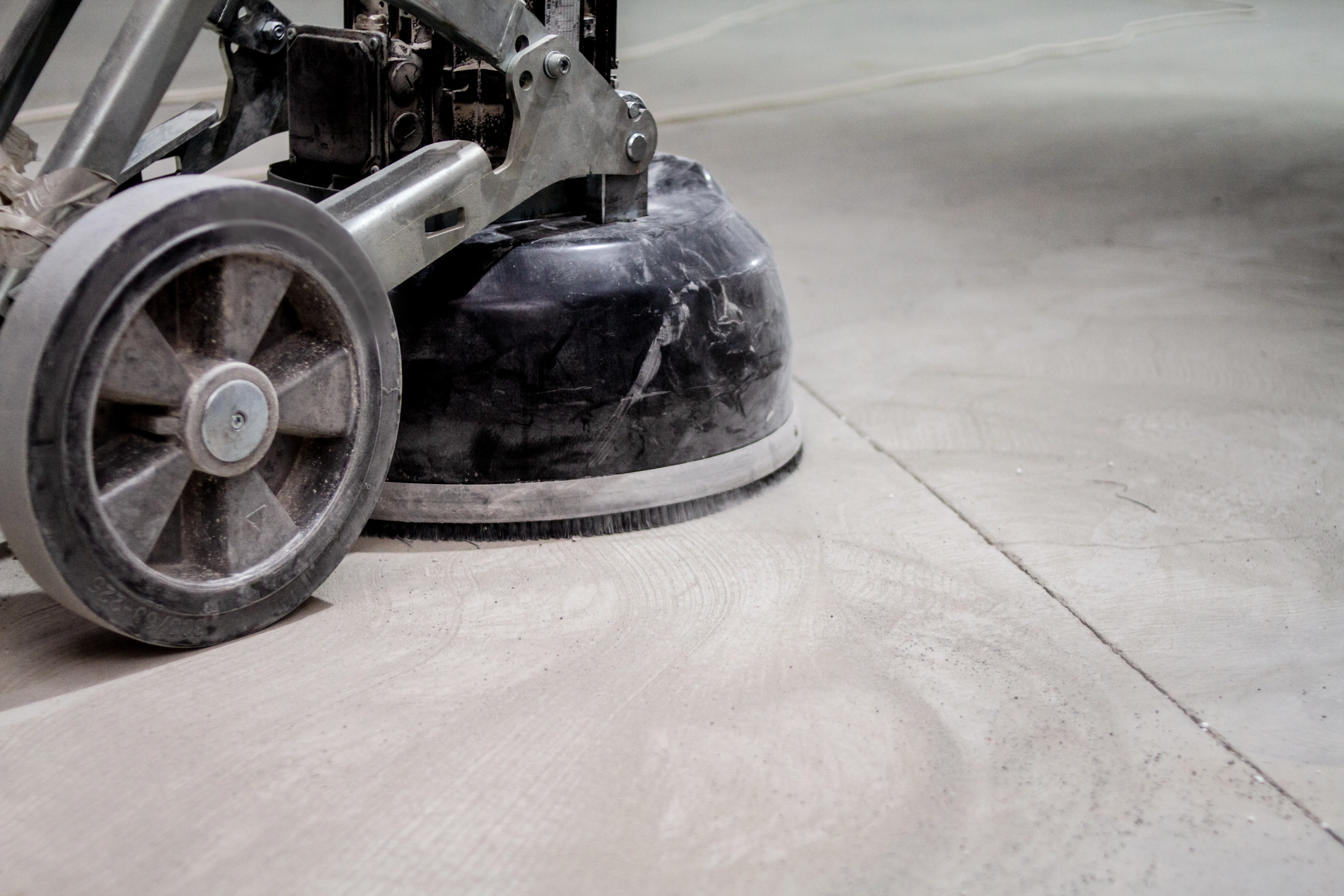
Bare concrete is porous. It soaks up oil, brake fluid, road salt and water, and the surface slowly breaks down into the fine grey dust that ends up on everything stored in a garage. A sealer closes those pores or coats over them, so spills sit on top long enough to be wiped up and the dust stops.
What a sealer does not do is change the concrete. Cracks, stains already in the slab, pitting and old paint all stay visible. A sealer is also far thinner than a coating, so it will not stand up to hot tires, dropped tools or heavy traffic the way an epoxy or polyaspartic floor does.
- Good fit: a sound slab where you want dust and stain protection and are happy with the look of concrete.
- Good fit: a basement or storage room that sees light foot traffic.
- Good fit: a shop floor or garage you plan to coat later but want protected now.
- Poor fit: a floor that is already stained, cracked or flaking, where a sealer will lock the problem in rather than hide it.
Penetrating vs Topical Concrete Sealers
There are two families of concrete sealer, and they work in opposite ways. Which one goes on your floor depends on whether you care more about keeping the natural look or about gloss and stain protection.
| Feature | Penetrating sealer | Topical sealer |
|---|---|---|
| How it works | Soaks into the pores and reacts inside the concrete | Forms a thin film on the surface |
| Look | Natural, no shine, no change in colour | Satin to gloss, darkens and enriches the colour |
| Stops water | Very well, while still letting the slab breathe | Well, but can trap moisture in a damp slab |
| Stops oil stains | Partly | Better, spills bead on the surface |
| Slip when wet | No change | Can be slippery unless grit is added |
| Typical reseal | Every 5 to 10 years | Every 2 to 3 years in a garage |
In Greater Vancouver, where many slabs carry moisture from below, a penetrating sealer is usually the safer choice for basements and slabs on grade. A topical film over a damp slab can whiten or peel as vapour pushes up behind it.
Do You Need to Seal Your Garage Floor?
Sealing is optional. Still, an unsealed garage floor in this climate takes more punishment than most people expect. Every winter car brings in water and road salt, which soak into bare concrete and slowly scale the surface. Oil and coolant stains set in within hours. And bare concrete never stops dusting.
A sealer handles all three at the lowest cost. If you also want colour, grip, hot-tire resistance or a floor that hides existing stains, that is a coating rather than a sealer, and our garage floor coating page covers the options. One point worth knowing before you decide: a sealed floor has to be ground back to bare concrete before it can be coated later, so if a coating is on the plan within a year or two, it can make sense to go straight to it.
The Best Sealer for a Concrete Basement Floor
For most Vancouver basements, a penetrating sealer is the right starting point. It does not form a film, so moisture moving up through the slab can still escape instead of blistering a coating from underneath. It stops dust, cuts water absorption and leaves the floor ready for rugs, storage or a later finish.
- Moisture test first. The reading decides whether a topical sealer is safe at all, or whether the slab needs a moisture-tolerant product.
- Clean or grind. Old paint, adhesive and efflorescence come off so the sealer can reach the concrete.
- Repair cracks. Cracks are filled before sealing so water has one less way in.
- Seal. One or two coats depending on how porous the slab is.
If the basement is being finished as living space, a coating usually makes more sense than a sealer. That comparison is on our basement epoxy flooring page, and why moisture matters so much here is explained in our moisture vapour guide.
Garage Floor Sealer, Concrete Floor Sealer or Floor Sealant?
The shelf labels use sealer, sealant and densifier almost interchangeably, but they are different products that do different jobs. A garage floor sealer and a concrete floor sealer are usually the same product sold in a different can. A sealant, strictly speaking, is the flexible caulk that fills joints and cracks. Here is what each type does on a Lower Mainland slab.
| Type | How it works | Best use |
|---|---|---|
| Silane or siloxane | Penetrates and makes the pores water-repellent; no film, no change in look | Garages, driveways and basements where water and road salt are the main problem |
| Silicate densifier | Reacts with the concrete to harden the surface and cut dusting | Dusty slabs, and as a step in polished concrete |
| Acrylic sealer | Thin topical film that darkens and adds sheen | Light-use areas; wears quickly under tires |
| Polyurethane sealer | Tougher topical film, better chemical resistance than acrylic | Shops and basements that want a sheen and more stain resistance |
| Joint and crack sealant | Flexible filler for control joints and cracks | Keeping water out of joints before or after sealing |
On most Vancouver garage floors we recommend a penetrating silane or siloxane sealer, because it handles wet tires and road salt without a film that can peel under hot tires. Once a slab carries oil stains, cracks or old paint, a sealer is no longer the right product, and a garage floor coating or grinding and resurfacing is the better use of the money.
Concrete Sealing vs Epoxy and Polished Concrete
Sealing, polishing and coating are the three ways to finish an existing slab. They differ in how much they change the floor, how long they last and what they cost.
| Option | What you get | Upkeep | Installed cost |
|---|---|---|---|
| Concrete sealing | Bare concrete look, dust and stain protection | Reseal every 2 to 10 years by type | Lowest; quoted per project |
| Grind and seal or polished concrete | Ground, densified concrete, matte to high gloss | Refresh the topical guard every 2 to 4 years | $6 to $12 per sq ft |
| Epoxy or polyaspartic coating | New surface, colour, grip, hides stains | Clean only; written warranty | $5 to $18 per sq ft by system |
Full pricing for coated and polished floors is in the Vancouver epoxy flooring cost guide. Sealing is quoted per project after we see the slab, because the price depends mostly on how much cleaning or grinding it needs rather than on the sealer itself.
What We Do Not Seal
- Pavers, interlock and flagstone. These need a joint-sand stabilising sealer from a hardscape specialist.
- Asphalt driveways. Asphalt sealcoating is a different trade and product.
- Floors with an active leak. Water coming through a crack or wall joint needs to be fixed at the source. A sealer will not stop it.
For exterior concrete that needs more than a sealer, such as a patio that is worn or slippery, see our patio and porch coating page.
Sealing a concrete driveway? Our concrete driveway sealing and coating page covers exposed aggregate, moss, road salt and spalling repair.
Concrete Sealing: Frequently Asked Questions
Concrete Sealing Across Greater Vancouver
We seal garage, basement and shop floors throughout Metro Vancouver and the Fraser Valley.
Get a Free Concrete Sealing Assessment
We will look at the slab, test for moisture and tell you whether a sealer or a coating is the better use of your money. You get a written quote either way.